
Click Here for Expedition Dates
This expedition involves a week in the spectacular cloud forests of Honduras ranked in the top 50 most important biodiversity sites in the world to protect. The groups will be based in forest camps for the first week and working with large teams of scientists. Projects include quantifying the carbon storage capacity of the forest and the forest structure, dung beetle community structure, amphibian and reptile transect surveys, bird point count and mist net surveys, small mammal community studies and bat surveys from mist netting and soundscaping. This is the most productive forest published team of forest researchers from all the Opwall site, so a good place to learn a range of forest survey techniques and how to analyse these data sets.
There is also the opportunity to learn how to use canopy access techniques to be able to undertake surveys in tree canopies. This is an optional extra course costing £170 provided by Canopy Access Ltd and you can do this half day practical instead of one of the other practicals being offered.
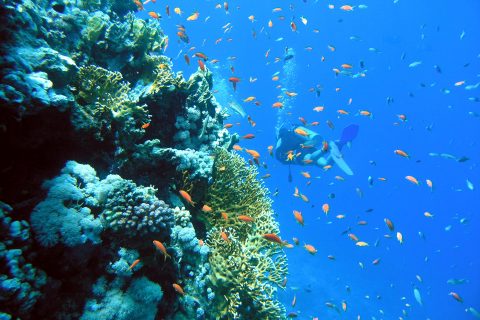
For the second week the group will be based either at the Tela or the Utila marine centres and will have the opportunity to complete a PADI Open Water dive training course or a Caribbean reef ecology and marine survey techniques course with practicals done by diving (if already dive trained) or snorkelling if you don’t wish to dive. The Honduras marine sites are home to Opwall’s pioneering efforts to integrate technological solutions into the monitoring and study of coral reefs, including our 3D computer modelling method. Opwall’s team of marine scientists in Honduras helps to support not only international academic research and new method development, but also supports local non-governmental organisations with their efforts to improve marine conservation in Honduras.
The cloud forests of Central America are some of the most biologically diverse ecosystems in the world, their unique microclimates supporting large numbers of species found nowhere else on the planet. Unfortunately, these cloud forests are also amongst the most threatened ecosystems globally, facing great pressures from habitat loss, climate change, hunting, and disease.
Cusuco National Park in Honduras is a classic example of an extraordinarily unique ecosystem that is also under great environmental pressure. The Opwall survey teams have worked here since 2003 and have recorded so many species (including 42 new to science) that the Park is now listed as one of the top 50 most irreplaceable protected areas in the world (based on a review of 173,000 sites worldwide). Unfortunately, this biodiversity is also at risk from a multitude of threats. As well as supporting an extremely active research program (with >140 research papers published to date), the datasets collected by the Opwall teams are also being used to underscore the global importance of the Park, supporting large conservation grant applications that will be necessary to secure the future of this completely unique, yet highly imperilled, cloud forest ecosystem.
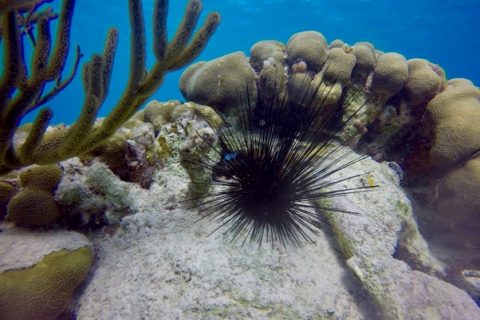
In the Caribbean, there are a number of core issues that have been affecting the biodiversity of coral reefs, including the mass mortality of keystone sea urchins that have allowed algal colonisation of reef areas, an invasive predator (lionfish) originally from the Indo-Pacific that has spread across the Caribbean, and overfishing of reef fish by local communities. Opwall has two marine research sites in Honduras where these issues and many more are studied: one is on the island reefs of Utila and the second on the coastal barrier reef of Tela. At both sites, teams of Opwall scientists and students collect annual monitoring data to assess temporal patterns in reef community health, alongside novel research to address key conservation priorities and gaps in our current understanding of these fragile ecosystems. Honduras is also home to Opwall’s pioneering efforts to integrate technological solutions into the monitoring and study of coral reefs, including our 3D computer modelling method. Opwall’s team of marine scientists in Honduras helps to support not only international academic research and new method development, but also supports local nongovernmental organisations with their efforts to improve marine conservation in Honduras.
The costs of a school group expedition can be highly variable. There is a standard fee paid to Opwall for all expeditions but the location you are flying from, the size of your group, and how you wish to pay all impact the overall cost.
You can choose to book the expedition as a package (which includes your international flights) or you can organise your travel yourself and just pay us for the expedition related elements.
If you are booking your expedition as a package, you also have the option of being invoiced as a group, or on an individual basis.
Climate
In the cloud forest of Cusuco National Park it can get warm in open areas (temperatures up to 20 degrees Celsius) but much cooler in the shade of the forest. Overnight the temperature can drop below 10 degrees Celsius at higher altitudes. It rarely rains in the morning but it regularly rains late in the afternoon and overnight. Our marine sites are hot and usually dry, but with occasional storms.
Fitness level required
Medium – High in Cusuco. You will need to hike from camp to camp for up to 4 hours with your backpack over steep terrain. At the marine sites some fitness is required for in water activities, but conditions are relatively easy.
Creature comforts
Facilities in Cusuco are very basic (tents, hammocks, occasionally homestays, river showers, basic trench toilets). There is no cell phone signal in Cusuco National Park and very limited satellite internet available through a communal laptop at Base Camp. Marine site facilities are comfortable but basic. There is phone signal and limited wifi that is often unreliable.









Students can fundraise as a group or individually to help support the costs of joining. Full training and support is given.
Learn more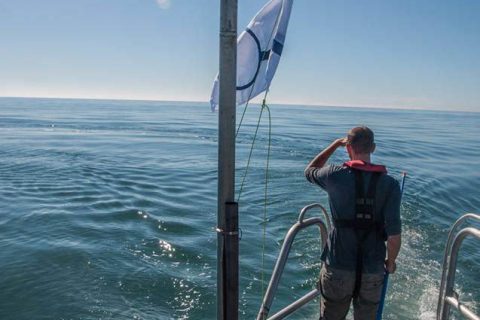


© 2026 Operation Wallacea Ltd. Website by Yello Media.
Social Media Links