We have a number of talks coming up about our expeditions, register for a talk by clicking here!

Welcome to Optoberfest!

Opwall is hosting it’s third annual Optoberfest scientific mini-conference this October!

Optoberfest gives us a chance to showcase some of the amazing science stories and research results from our global network of field sites, and for you to ask our speaking panel of international scientists questions about their work. Save the date for the next Optoberfest: 8 & 9 October 2026.

Talks will be happening throughout both days, and everyone is welcome to come to any or all sessions! Once each speaker completes their talk, the chat function on the webinar will be open to questions. Register to attend online using the button below.

Register now!

Upcoming Talks

  • Date Speaker Talk title
    8th October 2026 Dr Tom Martin A year in science – a summary of research achievements in 2025/2026
    Dr Adrian Seymour Expedition Stories: Why they are important and how to tell them
    Dr Peter Long What have we achieved since 2011 in the Mariarano forest, Madagascar
    Tom Auliard Smarter Marine Monitoring: Less Effort, More Data. – Tom Auliard
    Professor Richard Bodmer Ecological regulation and human resource use of aquatic and terrestrial vertebrates in the Peruvian Amazon
    9th October 2026 Dr Amy MacLeod Fynbos and Fauna: Balancing (Non-Native) Herbivores Alongside Endemic Flora at Gondwana Game Reserve, South Africa
    Frankie Smith From Monitoring to Management: The State of Opwall’s Marine Research
    Warre Van Caenegem Five Years of Bats, Bat Flies and Microfungi in Krka National Park, Croatia
    Mateo Ruiz Biodiversity Research in Calakmul Biosphere Reserve, Mexico: Achievements, Questions and Proposals
    Jamie Newman Seagrass, Sargassum, and Starting a Career in Conservation

2026 Speaker Bios

  • Thursday 8th October 2026

    Dr Tom Martin – Operation Wallacea

    A year in science – a summary of research achievements in 2025/2026

    Dr Tom Martin is the head of research at Operation Wallacea, and has been involved with the science programme for over 20 years! As in previous years, Tom will be starting Optoberfest 2026 with a summary of our research achievements in the last 12 months, and will take a look forward to objectives and opportunities in the year to come.

    –

    Dr Adrian Seymour – Independent film maker

    Expedition Stories: Why they are important and how to tell them

    We go on expeditions – often long and sometimes difficult journeys – where we interact with new cultures, immerse ourselves in nature, and if we’re lucky, we get to observe extraordinary wildlife and unusual behaviour. Yet often the only record of our expedition is a dry scientific paper which fails to encapsulate our experiences.

    Drawing on 15 years experience making wildlife documentaries for commercial television and streaming platforms, using examples, I give tips on how to angle and structure expedition stories for maximum impact.

    –

    Dr Peter Long, Oxford Brookes University

    What have we achieved since 2011 in the Mariarano forest, Madagascar?

    There has been an Operation Wallacea biodiversity monitoring project in the Mariarano forest Madagascar from 2011 – present.  In this talk I will review what the science teams have achieved in this period.  Highlights have included a great many papers, new species discoveries, social impacts in local communities and strengthened institutions.  A lot of Malagasy scientists have had the opportunity to conduct field research at this site.  The forests have remained mostly intact and we are working with partners to get a protected area designated.  Mariarano has been a testbed for a number of monitoring technologies which have varied in their effectiveness.  Countless volunteers have have a great field experience.  There have also been a few unhighlights too, not least covid-19.  And there remain ongoing challenges to conserving these tropical dry forests and wetlands.
    –

    Tom Auliard – University of Essex

    Smarter Marine Monitoring: Less Effort, More Data

    Marine ecosystems are facing increasing environmental challenges, and keeping track of how they are changing through time is key to protecting them better. On Hoga Island, a remote island in Indonesia’s coral triangle, Operation Wallacea has been monitoring reefs for over 20 years, offering a rare long-term record of a changing reef.

    However, long-term monitoring is only as valuable as the method behind it. This talk explores ways in which processing of monitoring data from Hoga can be improved. It covers how we tested new methods, specifically the analysis of stereo-video data, in a way that did not compromise data quality, and highlight how these methods delivers similar results several times faster.

    –

    Professor Richard Bodmer – University of Kent

    Ecological regulation and human resource use of aquatic and terrestrial vertebrates in the Peruvian Amazon

    At the Rio Amazonas Research Station in the Peruvian Amazon, Dr. Richard Bodmer and his team of scientists are studying the ecology of all vertebrate groups. Ecological communities are complex in the diverse Amazon forests, especially in western Amazonia, where biodiversity is particularly high. The vertebrate fauna in these communities inhabit both aquatic and terrestrial environments, and the team monitors the populations of approximately 220 arboreal, terrestrial, and aquatic vertebrate species monthly. The research takes a comprehensive approach to understanding the sustainability of fishing and hunting by comparing natural predation rates to wildlife harvests by local communities. Furthermore, extensive climate change research illustrates how recent historic droughts and floods affects both aquatic and terrestrial ecosystems. In this talk, Professor Bodmer will highlight key findings in these research areas, drawing on results from a unique 20-year dataset sourced from the study area.

  • Friday 9th October 2026

    –

    Dr Amy MacLeod – University of Essex

    Fynbos and Fauna: Balancing (Non-Native) Herbivores Alongside Endemic Flora at Gondwana Game Reserve, South Africa – Amy MacLeod

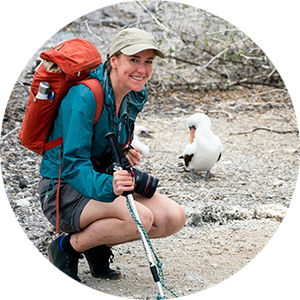
    Dr. Amy MacLeod is a postdoctoral researcher affiliated with the Museum für Naturkunde (Natural History Museum) in Berlin, Germany. Her research usually focuses on the ecology, evolution, and conservation of the Galápagos marine iguana, but through her work with Operation Wallacea, she has also worked on large mammal ecology in South African game reserves.

    In this talk, Amy focuses on GIS-based analysis of game-transect data collected at Gondwana Game Reserve in the Western Cape. Gondwana is ecologically distinctive, in that a large proportion of its vegetation is fynbos — an exceptionally diverse, highly endemic and endangered plant community. Because many of Gondwana’s herbivores are not native to this vegetation type, understanding the interaction between these herbivores and the plant community is crucial for reserve management that aims to protect both flora and fauna. Drawing on vegetation surveys and game transects undertaken between 2022 and 2026, this talk summarises the data collected thus far, presents patterns of habitat use, explores how they relate to vegetation type, and what they suggest for management practice.

    –
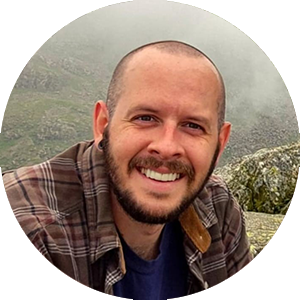
    Frankie Smith – Operation Wallacea

    From Monitoring to Management: The State of Opwall’s Marine Research

    Marine ecosystems are experiencing rapid and increasingly widespread change, driven by pressures identified as the main causes of the current biodiversity crisis. Long-term ecological monitoring provides a means of detecting these changes, identifying differences in trajectories and understanding how communities are responding to environmental change over time. This talk will provide a broad spatial and temporal comparison of Operation Wallacea’s marine monitoring sites. Exploring how benthic communities, alongside fish abundance, biomass and community structure, have changed through time. These patterns will be considered in the context of the environmental and anthropogenic pressures affecting each site. Then moving on to discuss, interventions, that demonstrate how long-term datasets can inform management, evaluate outcomes and identify priorities for future research. It will conclude by considering how Opwall’s marine science programme can develop to better utilise existing field infrastructure to identify additional responses to environmental change.

    –
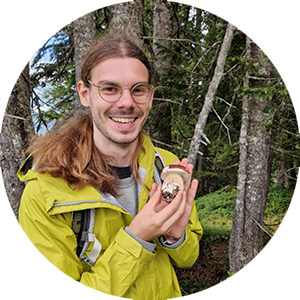
    Warre Van Caenegem, University of South Bohemia and the Biology Centre of the Czech Academy of Sciences, Czechia

    Five Years of Bats, Bat Flies and Microfungi in Krka National Park, Croatia

    Warre Van Caenegem is a PhD student at the University of South Bohemia and the Biology Centre of the Czech Academy of Sciences, Czechia. He studies the diversity and evolution in the tritrophic system of bats, bat flies, and Laboulbeniales microfungi, with a focus on the latter group. In this talk, Warre will present preliminary results from five years (2021–2025) of bat captures and ectoparasite collections in Krka National Park, Croatia. Bats host a wide diversity of parasites, including the highly diverse and host-specific group of bat flies. In turn, these bat flies are known to host microfungi. This association between bat flies and fungi has evolved at least four times independently on different continents. While both bat flies and their microfungi are generally considered highly host-specific, almost nothing is known about their ecological preferences, host ranges across different environments and geographical regions, or their vulnerability to (local) extinction. This long-term dataset from Krka National Park provides an opportunity to examine these associations across bat species, sampling locations, and years. The extensive sampling effort has not only resulted in new country and regional records for species from all three groups, but has also revealed several interesting patterns. These include correlations between bat traits, roosting preferences, and conservation status and the presence and prevalence of bat flies and microfungi. In addition to these findings, the challenges of working with long-term datasets collected by many different people will be discussed.

    –
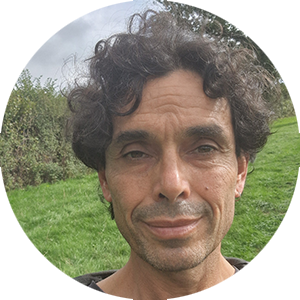
    Mateo Ruiz–  University of Nottingham, UK

    Biodiversity Research in Calakmul Biosphere Reserve, Mexico: Achievements, Questions and Proposals

    Opwall’s biodiversity monitoring datasets from the Calakmul Biosphere Reserve (CBR) in Mexico stretch back to 2013, and these have been used to inform decision makers and produce high-quality peer-reviewed research. Reviewing existing publications and contributions from dissertations students highlights mammals and herpetofauna as two important species groups. Furthermore, analysing data from mist-netting to monitor birds and bats could reveal species with significant temporal trends in abundance levels. It may also answer questions on how the availability of standing water in aguadas influences species diversity and composition, and whether change in canopy cover in the reserve’s buffer zone is influencing the community structure of volant vertebrates. Looking forward, we assess the benefits of introducing bird ringing in CBR and outline proposed collaborations with visiting academics to implement projects on geometrid moth taxonomy, landscape ecoacoustics, and mark and recapture of frugivorous butterflies.

    –
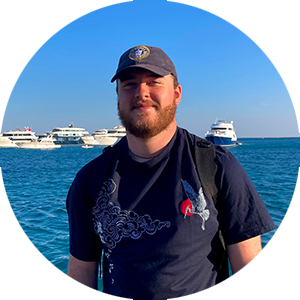
    Jamie Newman, University of Nottingham, UK

    Seagrass, Sargassum, and Starting a Career in Conservation

    Jamie is studying an MRes in Conservation Biology at the University of Nottingham, UK, researching the impacts of holopelagic Sargassum influxes on seagrass meadows and green turtle foraging. During his Zoology degree at the University of Nottingham, Jamie joined Operation Wallacea’s Mexico marine site as a dissertation student, looking at seagrass meadow health and green turtle abundance. This summer, Jamie returned to Akumal for his masters research whilst supervising the seagrass and turtle monitoring project. In this talk, Jamie will present some of his current research and talk about his journey working with Operation Wallacea and some of the skills and opportunities he has gained.

    Caribbean coastlines have been inundated with holopelagic Sargassum since 2011, having significant negative effects on coastal marine ecosystems including seagrass meadows. Decomposition of accumulated Sargassum results in brown tides, which are associated with reduced seagrass growth, seagrass dieback, and shifts towards algal dominance. Seagrass is a crucial food source for juvenile green turtles therefore increased severity of Sargassum influxes could threaten both turtles and their foraging habitat. This talk presents findings on the interactions between Sargassum, sea grass and green turtles in Akumal Bay, Mexico, an important green turtle foraging site.

    Following the impacts of Sargassum on seagrass and green turtle foraging, the talk will finish by highlighting Jamie’s experience working with Operation Wallacea and the valuable skills he gained from joining a field expedition.
Talks from 2025

Dr Tom Martin - 30 years of biodiversity research – an overview and celebration of Operation Wallacea’s achievements over the last three decades

Tom is the head of research at Operation Wallacea, with an involvement with Opwalls research program stretching back nearly 20 years! Tom will introduce the Optoberfest Science mini-conference, provide a summary of research achievements across our various sites over the last 12 months, and discuss key objectives for the coming year.

Will Dawson Noisy Eaters! - Building belowground invertebrate trophic networks using ecoacoustics and metagenomics for soil health monitoring

Monitoring soil invertebrate trophic networks remains difficult despite its importance for assessing ecosystem resilience. Ecoacoustics is increasingly used to monitor soil invertebrate communities and interactions but poorly resolves species’ identities. Molecular methods such as DNA metabarcoding can accurately identify species but lack context. Integrating the contextual information from ecoacoustics with taxonomic resolution from metabarcoding could enable accurate and streamlined monitoring of soil trophic networks. This presentation will outline the importance of soil biodiversity, trophic networks, and how we plan to use integrated biomonitoring methods to assess soil health. These principles will be demonstrated in the context of Will’s ongoing PhD and how they can be applied to wider research, including Operation Wallacea

Hrvoje Cizmek - Biodiversity research in the Adratic ecosystems of Silba Island

Hrvoje Čižmek is the founder and lead researcher of the Marine Explorers Society 20,000 Leagues, with over 20 years of underwater research in the Adriatic Sea. He played a leading role in developing Croatia’s Natura 2000 marine habitat protocols and is completing his PhD in Oceanography at the University of Zagreb. His research, documented through publications and conference contributions, focusses on benthic community ecology, seagrass habitats, and marine protected areas. He is also at the forefront of Croatia’s first co-management of a marine protected area (MPA) and is actively advocating for the proclamation of the Silba Reefs as a special marine reserve. Over his career, he has managed more than 50 national and international research and educational projects, establishing himself as both a leading marine scientist and a driver of innovative conservation policy. In his upcoming talk, he will present results from collaborative research with OpWall students on noble pen shells, sea urchins, and seagrass, as well as outline future research on MPA management and biodiversity restoration monitoring following the establishment of a no-take zone around the Silba Reefs.

Darius Rose - Metabarcoding as a tool to examine dietary niche partitioning in the herbivorous mammals of Gondwana Game Reserve

South African game reserves typically support a large and diverse range of herbivores that perform different dietary functions. As part of his MSc project at the University of Guelph, Darius examined this leads to niche partitioning In the Gondwana Game Reserve, Western Cape. His project analysed dung samples using metabarcoding methodologies to investigate whether dietary niche partitioning occurred among 12 large-bodied herbivore species during the winter of 2023. Three research questions were examined: 1) Does dietary niche partitioning facilitate coexistence between large herbivores? 2) Does body size play a role in the dietary diversity of large herbivores? 3) Does dietary niche partitioning occur between closely related species in the same family? In this talk, Darius will discuss the answers to these questions, as well as how these outcomes compare to results found in other managed South African Game Reserves.

Dr Sam Jones - Testing the mechanisms of elevational range limitation in Central American cloud forest songbirds

Restricted elevational ranges are common across tropical montane species, but the mechanisms generating and maintaining these patterns remain poorly resolved. A longstanding hypothesis is that specialised thermal physiology explains these distributions. However, biotic factors such as habitat and interspecific competition have also been proposed to limit tropical species’ elevational ranges. We combined point-level abundances, respirometry-based measurements of metabolic rate, habitat surveys, and playback experiments to simultaneously test these three hypotheses for four species of Central American cloud forest songbirds in Cusuco National Park. Contrary to the physiological hypothesis, we found no evidence that thermoregulatory costs constrain species distributions. Instead, thermal conditions across each species’ elevational range remained well within sustainable limits, staying ≤65% of hypothesised thresholds for tropical birds, even at the highest elevations. By contrast, we found some support for a combined role of habitat and competition in shaping elevational ranges. In one related species pair, the dominant lower-elevation species appears restricted by microhabitat, while the higher-elevation species is likely prevented from expanding downslope by the presence of this congener. Taken together, we conclude that thermoregulatory costs are an inadequate explanation for elevational range limits of tropical birds at our site, and suggest that biotic factors can be key in shaping these distributions

Dr Rowan Watt-Pringle - Navigating real-world difficulties in research

Rowan is a tropical coral reef ecologist currently based in Bordeaux, with practical experience in the Indo-Pacific, Southwest Indian Ocean, and Caribbean over the past 13 years. He has also spent many years as a reef ecology trainer, including on Opwall expeditions in South Africa, Cuba, Honduras, and Indonesia. In 2024 he completed a PhD through Hasanuddin University in Makassar, Indonesia, the original focus of which was on testing the resilience of nursery-reared and outplanted branching corals at different light levels. In this talk, Rowan will discuss potential unforeseen difficulties that researchers may need to overcome in the field, with specific reference to the changes that needed to be made to his PhD work following the onset of the Covid-19 pandemic in February 2020. This will include how he tackled the problem of having to evacuate the research site mid-installation of experimental restoration areas, and the adjustments that were needed to ensure that he could meet the requirements of the PhD and extract publishable data from the project.

Dr Brogan Pett - Megadiverse Madagascar: insights into the spider community of Mariarano dry forest

Brogan is a biogeographer and arachnologist at the University of Iceland. Brogan runs the spider workgroup of BINCO (Biodiversity Inventory for Conservation: www.binco.eu) focussing on discovering and cataloguing tropical spider diversity. Our flagship collaborative project is at the Mariarano field site in northwestern Madagascar, dry deciduous forest of roughly 5,000ha interspersed with low intensity agriculture and human settlements. BINCO and Opwall have been working on entomology projects here together since around 2016. Brogan got involved in 2017 and has now completed four seasons at the site. The talk will focus on taxonomic work completed to date, give a brief run through of the > 100 new species to science known from the site (including the seven published to date) and the development of a new standardised community ecology protocol. Overall, the spider project focusses on understanding community structure, diversity patterns and functional and taxonomic diversity. 

Dr José António L. Barão-Nóbrega - Fantastic Beasts: A voyage through the world of Crocodiles, Aguadas & Calakmul

The presentation blends scientific knowledge with conservation stories from the point of view of someone with an unexplainable fondness for crocodilians, swamps and tropical forests. This voyage covers a brief introduction to the world of crocodilians, insights from personal research experience with freshwater habitats and their Crocodiles in Calakmul and the Yucatan Peninsula, how Opwall played a key role in forging an international collaboration for Crocodile Research and Management for Conservation (CRMC; https://www.crocodileresearch.com/) and some highlights from CRMC work and research projects thus far.

Mădălina Marian - Socio-economic incentives to preserve the last medieval agricultural landscape in Europe

Mădălina Marian is part of the ADEPT Transylvania team and the manager of the Angofa Wildlife Centre. For the past 20 years, ADEPT has been dedicated to preserving the last medieval landscape of Europe, a place of extraordinary biodiversity, rare species, and traditional farming practices that have shaped its unique mosaic of rich habitats. ADEPT has been collaborating with Operation Wallacea for much of this period, with the first Opwall group going to Transylvania in 2009. In her presentation, Mădălina will share the story of ADEPT’s work—highlighting key achievements, lessons learned along the way, and the best approaches to building meaningful collaborations with local communities.

Dr Jon Chamberlain - Scalable Solutions for Monitoring Marine Ecosystems

Dr. Jon Chamberlain is a Senior Lecturer and Director of the Marine Technology Research Unit at the University of Essex, UK. With a background in marine science and technology, he specialises in developing automated, scalable solutions for ecosystem monitoring. His current research integrates deep learning and 3D photogrammetry to assess changes in benthic habitats. In this talk Jon will examine improved methods for monitoring marine ecosystems. Marine ecosystems are experiencing rapid change due to climate change, habitat loss, and other human impacts. Monitoring these changes is essential for protecting biodiversity, but traditional methods are often time-consuming, expensive, and limited in scale. This talk presents automated and scalable technologies to improve how we monitor and understand ecosystem change in the marine environment. Two key approaches will be presented: (1) deep learning algorithms for classifying underwater imagery and detecting changes in coral, algae, and sponge coverage; (2) high-resolution 3D modelling and photogrammetry to measure reef structural complexity over time. The methods are being applied to marine monitoring in the Wakatobi Marine Reserve around Hoga Island in Indonesia, a site with long-term ecological data collected in collaboration with UNHAS. By combining science, technology, and innovation, this talk offers a vision for the future of marine conservation, empowering researchers and decision-makers with the tools they need to protect the ocean in a rapidly changing world.

Talks from 2024

Dr Tom Martin - Introduction and 2024 science and research round-up

Tom is the head of research at Operation Wallacea, with an involvement with Opwalls research program stretching back nearly 20 years! Tom will introduce the first annual Optoberfest Science mini-conference, provide a summary of research achievements across our various sites over the last 12 months, and discuss key objectives for the coming year.

Dr Joe Bailey - Updates on research in Târnava Mare, Romania, including long-term stability of bird populations

Joe is a Senior Lecturer in Ecology, Conservation, and Sustainability at Anglia Ruskin University, and has been involved with the research program at our Romania site (and elsewhere) for many years. In this talk, he will provide a brief overview of recent research at our research in the Târnava Mare gion. He will put particular focus on a recently published paper “Response trait diversity and species asynchrony underlie the diversity–stability relationship in Romanian bird communities”, as well as discussing ongoing butterfly and botany research and future ambitions.

Alex O'Brien - Ecosystem shifts and lionfish: The implications of coral bleaching in Tela, Honduras

Indo-Pacific lionfish have become invasive throughout the western Atlantic, and as a result of their predatory effects are considered the most heavily impacting invasive marine vertebrate ever recorded. In the Caribbean across areas such as Utila, their populations are often managed via culling by SCUBA divers. Tela, with minimal dive tourism has provided us a unique opportunity to study lionfish in an area of high coral cover without this fishing pressure. In 2023, a mass-bleaching event occurred across Tela Bay, leading to up to 90% coral mortality. This was quickly colonised by turf algae, which has since developed into areas of dense macroaglal cover. The rapid change of the benthos will certainly have cascading effects on the entire coral reef community. This talk will outline some of the key findings from previous Opwall research conducted at Tela, and discuss the effect that this phase shift may have on the resident lionfish.

Imogen Vieten - Elephant Reintegration Trust behavioural research in Gondwana Game Reserve

The Elephant Reintegration Trust (ERT) is a South African charity which aims to develop secure wild environments to manage reintegration and rewilding of previously captive elephants, ensuring they can live out their remaining years with dignity as wild elephants. Imogen has worked with the Trust (and Opwall’s in-country partner Wildlife Ecology Investments – WEI) in several different reserves across South Africa, including the Operation Wallacea/WEI field site at Gondwana Game Reserve. In this talk, she will summarize the main objectives of the ERT field studies in both Gondwana and elsewhere, and discuss the challenges of meeting these objectives within the relatively small, fenced reserves typical of South Africa, in which various environmental factors can influence the wellbeing of elephants both positively and negatively.

Dr Merlijn Jocque - BINCO surveys in Cusuco National park and Mariarano forest - a summary of achievements to date

Merlijn in the founder and director of the Belgian-based NGO Biodiversity Inventory for Conservation (BINCO), who have been involved with ecological and taxonomic studies at our research sites for many years. BINCO focuses on biodiversity assessment and monitoring, taxonomy, open data, capacity building, and raising awareness about the critical role of biodiversity in conservation efforts. Their mission is to inspire individual action for biodiversity, unite smaller initiatives into impactful movements, and kick-start nature conservation projects. Since 2018, BINCO has had a formalized collaboration with OPWALL in Cusuco NP and Mariariano Forest, studying selected invertebrate groups. In this talk Merlijn will provide an overview of BINCOs achievements, ongoing and upcoming studies, and some reflections on biodiversity monitoring and conservation in these fascinating yet poorly-studied areas.

Professor James Bell - The rise of sponges in the Anthropocene

We have entered the Anthropocene, a geological period where human activity is the dominant influence on global climate and the environment. Coral reefs across the world have been dramatically altered in recent decades, with human activities contributing to mass coral die-offs in tropical oceans. The degradation of reef-building corals is expected to worsen under current climate trajectories, meaning future reef ecosystems are likely to be very different from those found today. Professor James Bell’s research team has proposed sponges as potential ‘winners’ on future coral reefs, as they appear to be more tolerant than corals to a range of environmental stressors. In this talk, James describes some of his teams key findings from research conducted at the Operation Wallacea sites in Indonesia and Honduras, supporting the idea that future reefs may be more dominated by sponges. The talk will discuss some of the implications of increased sponge dominance for coral reef functioning and for the 1 billion people who rely directly on coral reef resources. Finally, James will outline how future work at Operation Wallacea sites might further contribute to our understanding of how future reefs will function and the roles sponges will play in these ecosystems.

Dr Morgan Hughes - Standard deviation: studying the bats of Krka National Park

Systematic bat surveys have been ongoing in Krka National Park annually since 2021. However, capturing bats in the arid, scrub-dominated habitats of Krka using ‘traditional’ sampling techniques can be challenging. In this talk, Morgan will discuss the findings of several experimental approaches to bat mist-netting that have been explored in the Park, all of which had the goal of improving capture rates in the challenging environment Krka represents. This talk will highlight key findings from several publications stemming from our experimental work in Krka, and will outline the new, innovative methodological studies that will be conducted in the near future.

Dr Danny Haelewaters - Fungi and bat fly studies in Cusuco National Park and beyond - a summary of progress to date.

Danny is a mycologist and entomologist based at the University of Ghent. Danny’s team have been working on fungal inventory projects in Cusuco National Park since 2019. Hundreds of collections have been sampled up until the 2024 field season, resulting in the description of six new species for science, with several others in process of description. In this talk, Danny will be discussing the taxonomic and inventory work completed to date, and also give a summary of future fungi research plans. Danny will also discuss his ongoing project focusing on the ectoparasitic microfungi that are associated with flies that are bloodsucking parasites of bats. This project is run in collaboration with the respective bat teams in Cusuco National Park (since 2019), Krka National Park (since 2021), and Calakmul Biosphere Reserve (since 2024). The project aims to understand the full breadth of diversity within this multitrophic system, as well as host specificity patterns, and community ecology questions.

Dr Ian Thornhill - The freshwater invertebrate communities of Dominica

Studies of the freshwater invertebrate communities by Operation Wallacea began in 2014 and have been repeated six times since (to 2022) alongside ecosystem functioning experiments (leaf litter decomposition). This has been a rare opportunity to explore the invertebrate biodiversity of an under-sampled biodiversity hotspot, and to undertake monitoring of these environments using biological indicators based upon the invertebrate taxa. More detailed and consistent sampling from 2016, either side of Hurricane Maria in 2017, has revealed over 100 taxa with potentially new records for the island. With the help of OpWall volunteers, consistent monitoring of habitat and chemistry variables has occurred at 10 sites across four river systems and the Freshwater Lake site, as well as opportunistic sampling at a further 40+ sites. In this talk the methodological approaches will be outlined, and the composition of those communities discussed, as will the physical and chemical influences upon the macroinvertebrate assemblage.

James Muir - Monitoring the ecological impact of coral reef restoration in Akumal, Mexico

Coral reef ecosystems face a multitude of threats. Rising sea surface temperatures and increased anthropogenic disturbances have left many of the worlds reefs dead and degraded. Akumal is part of the Mesoamerican Barrier reef system, and restoration efforts have been put in place here for a number of years. In a new project in 2024, Opwall began to assess the ecological impact of these restoration efforts with an aim of starting a long term ecological monitoring programme in the area. In this talk, James will give an overview of goals for this important project.

  • Opwall Jobs

    Interested in following in the footsteps of our speakers and working on one of our summer expeditions? Each year we have a huge number of field staff that come and join us at our projects across the globe, from lecturers to survey leaders. All of our seasonal roles are advertised on our jobs page and applications usually open in January for that year. To apply visit: jobs.opwall.com

Find out more

Wallace House, Old Bolingbroke, Spilsby, Lincolnshire PE23 4EX, UK
| +44 (0) 1790 763194 | info@opwall.com