
What are mangroves? These salt-tolerant trees grow around coastal waters in the tropics and subtropics. Ranging from shrubs to majestic trees, they have extraordinary adaptations to cope with salt water and saturated soils. These include foamy aerenchyma tissue in root systems to transport air down into saturated soils, glands to exude salt from leaves, upward growing roots to take in air from above water (pnematophores), prop roots to provide stability in fluctuating water levels, and seeds that germinate prior to falling from the trees. This dizzying array of adaptations has evolved across a range of unrelated taxonomic groups, some of which have converged on similar adaptive solutions to their challenging environment. As an ecosystem, mangroves are dynamic and open, attributes which contribute to their significance and vulnerability.
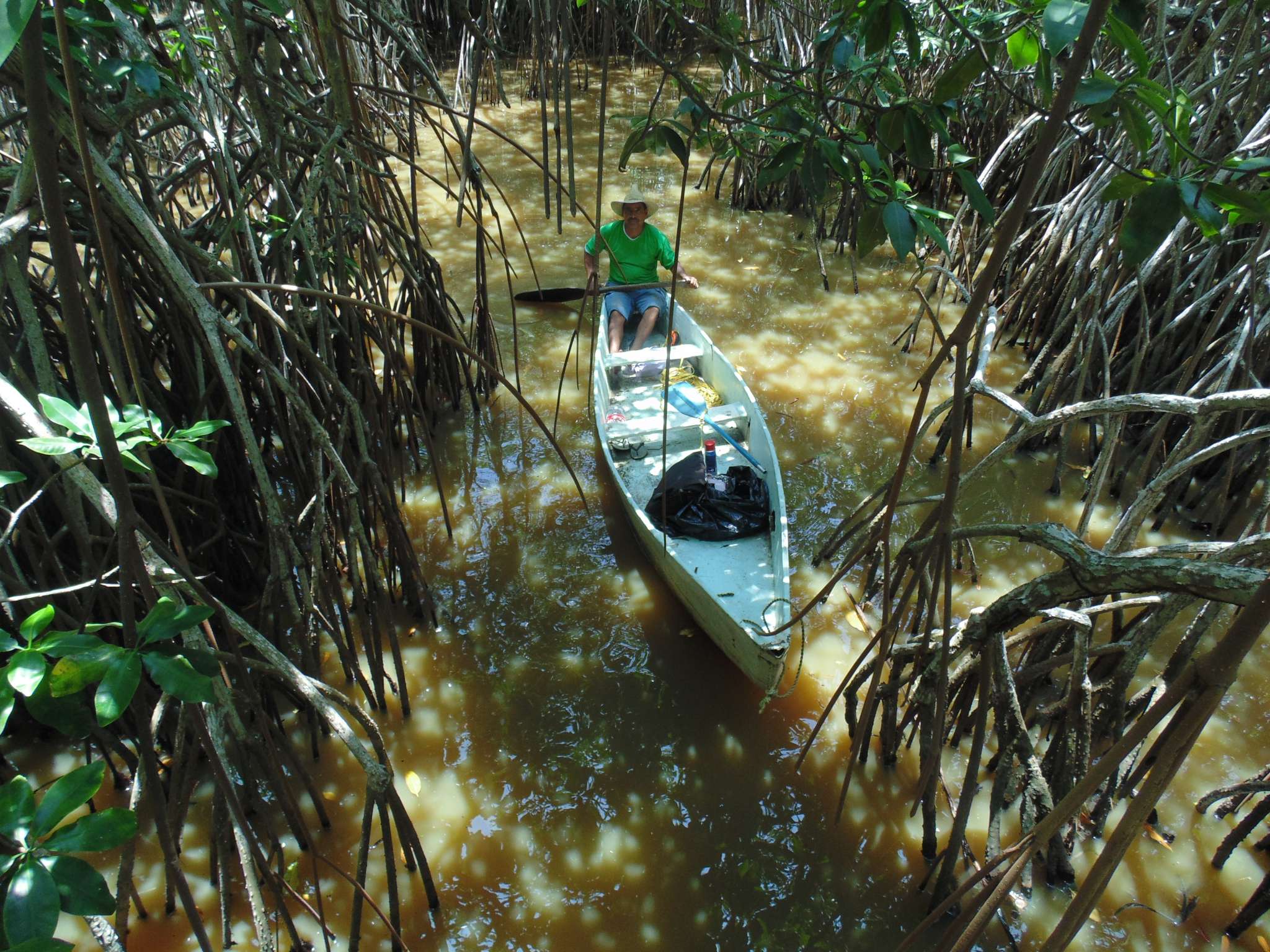
The nearest mangroves to the UK are 3,750 km away in Egypt, closely followed by those of Senegal. 75 % of the world’s mangroves occur in just 15 of our 193+ nations, with Indonesia, Australia and Brazil holding the greatest areas. In southeast Asia there are 45 mangrove species, but this regional diversity is something of an exception. The coasts of Africa and the Americas usually harbour less than 10 species, and in many cases only 3 or 4 occur together locally. Mexico holds the 4th largest area of mangrove globally, and the powerful wave action along it’s Pacific coastline tends to restrict growth to coastal lagoons, which are fed by rivers, and are connected to the ocean by tidal channels.
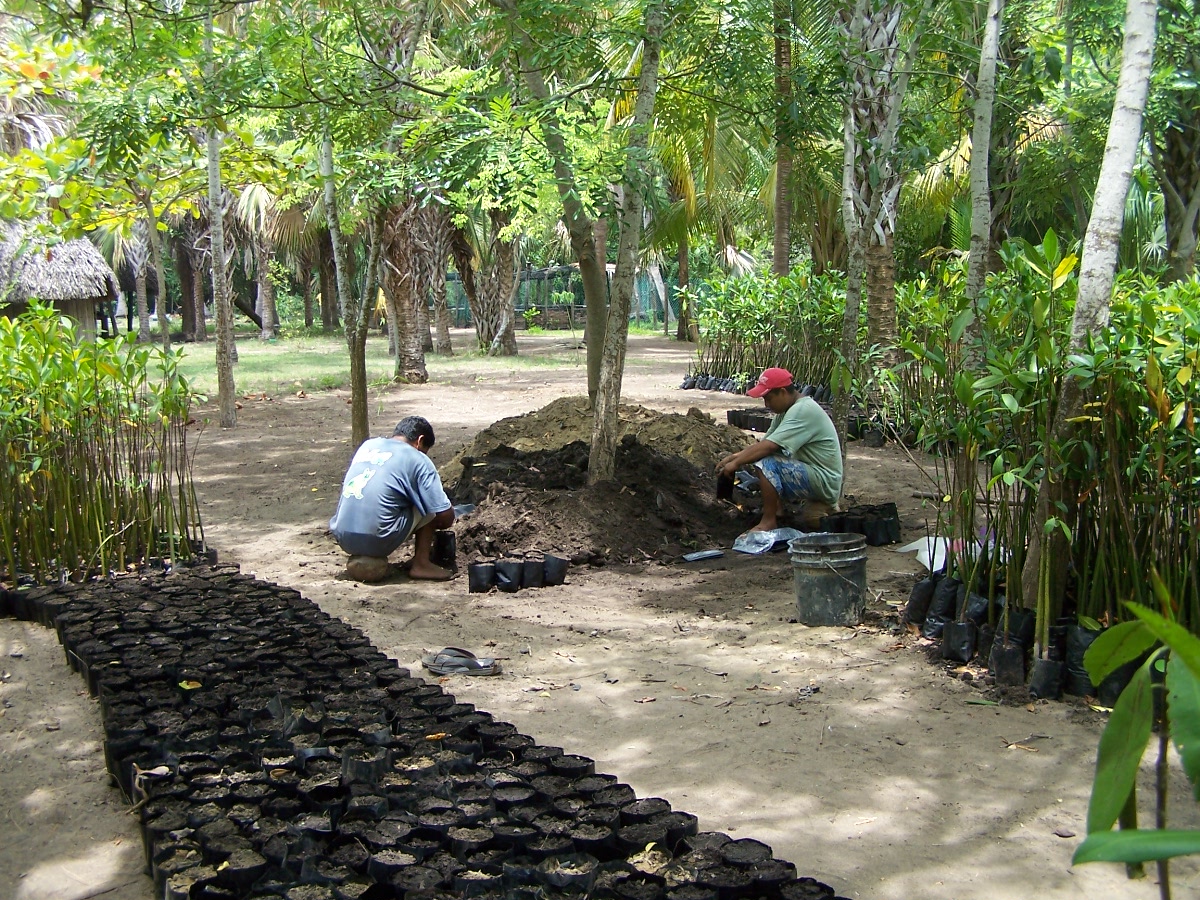
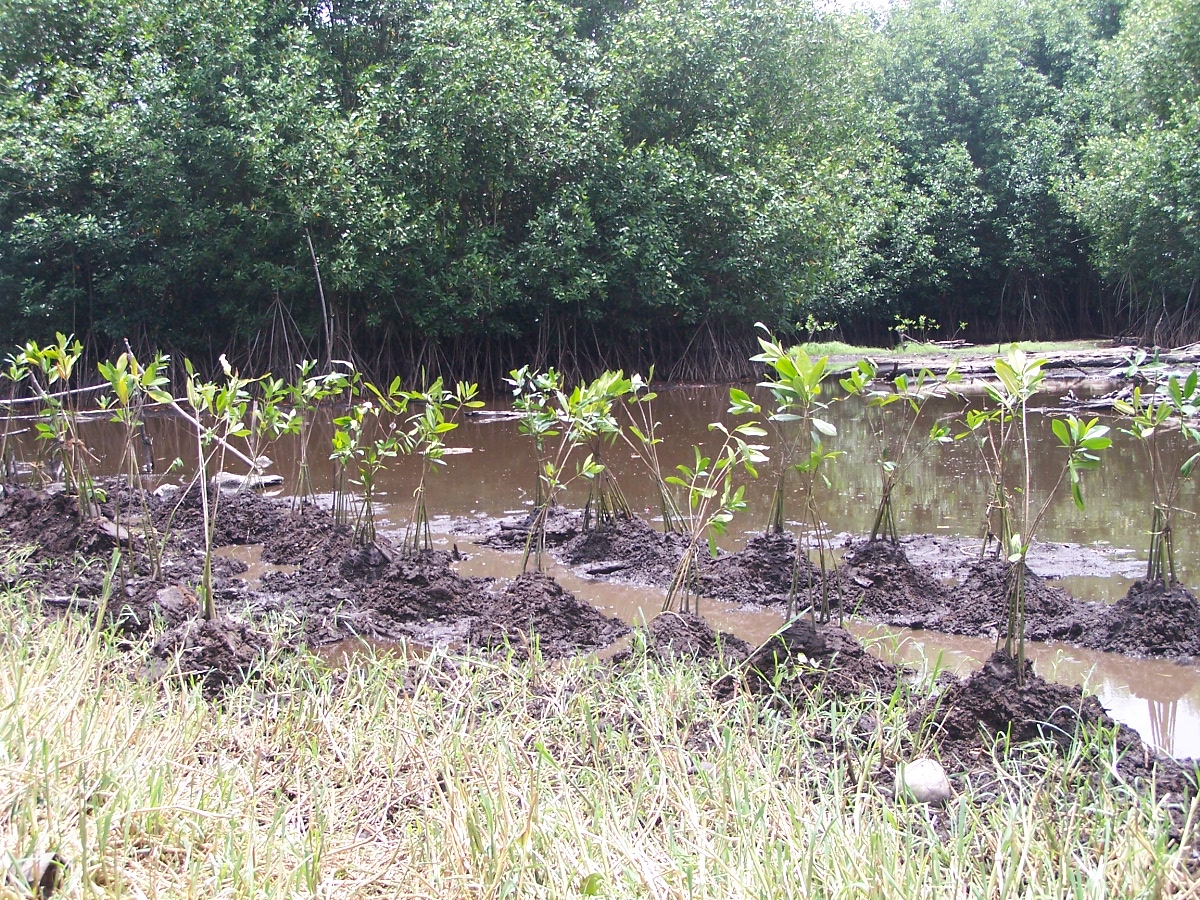
My hands-on experience with mangroves took root when I lived in a small community in Oaxaca, on the Pacific coast of Mexico. La Ventanilla is on the shore of a coastal lagoon and village life is in many ways traditional. However, there is something entirely remarkable: This community has traded in a livelihood from farming, fishing and hunting, to manage an officially registered wildlife management unit and a thriving ecotourism enterprise. Working with a cooperative I learned how to collect mangrove seeds, germinate them, grow them on, and plant them out, and how to monitor the success of reforestation, the impact of hurricanes, and subsequent regeneration. I also learned how to spot crocodiles, iguanas, birds and turtles as I guided boat loads of visitors through the trees! When I left La Ventanilla after 10 years I carried with me a huge appreciation for the remarkable role that mangrove ecosystems play in coastal ecology.
In many ways the mangroves of coastal lagoons act as a crossroads, connecting ecological communities from upriver, from the sea, and from adjacent coastal habitats such as dunes, wet forests, thorn forest and reed beds. Wherever a crossroads is busy there is usually a thriving community crowding around it, and the mangroves are no different. Fish from the coastal waters visit submerged root systems to lay eggs, and their offspring hatch, feed, grow and then swim out to sea. Herons and egrets build nests in the trees, but fly along the coast or upriver to fish for food. Terrestrial birds and mammals from neighbouring forests enter the mangroves to forage, and crabs venture from the mangroves into the woods. The crocodiles that live there use the coastal water to connect lagoons when they are seeking a new territory.
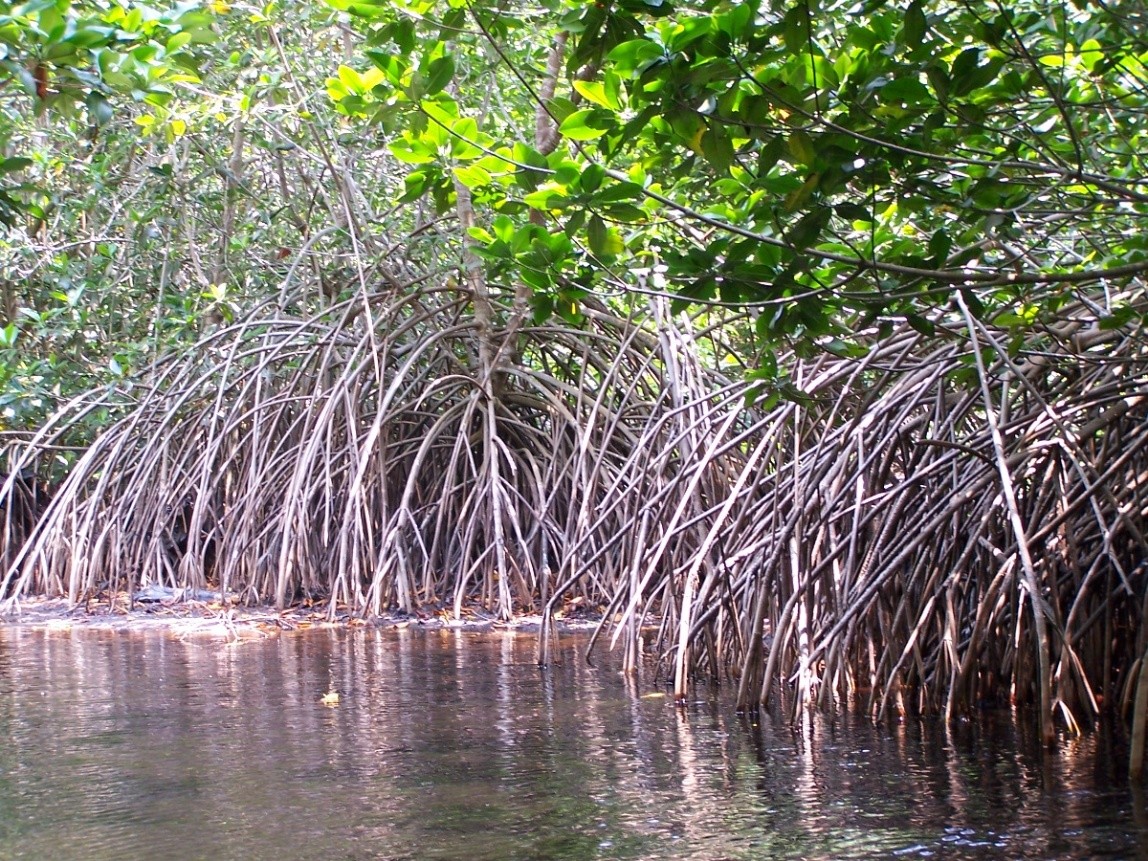
Red mangrove trees (Rhizophora mangle) are one of four mangrove species that grow on the Pacific coast of Mexico, and are widely used in reforestation projects. Their extensive prop roots give the impression of a tree on tip toes!
These forests are also a junction for nutrients, pollutants and carbon, which are exchanged or stored. Nitrogen rich river waters meet phosphorous laden sea water, sustaining mangrove trees, which in turn contribute organic matter as leaves die and drop into the lagoon. Pollutants and sediments are filtered by the trees, improving the water quality in coastal reefs and sea grass beds, and carbon is sequestered and stored by the trees and the soil around them. The mangrove wildlife itself delivers nutrients to and from the connected ecosystems, in the form of droppings and carrion.
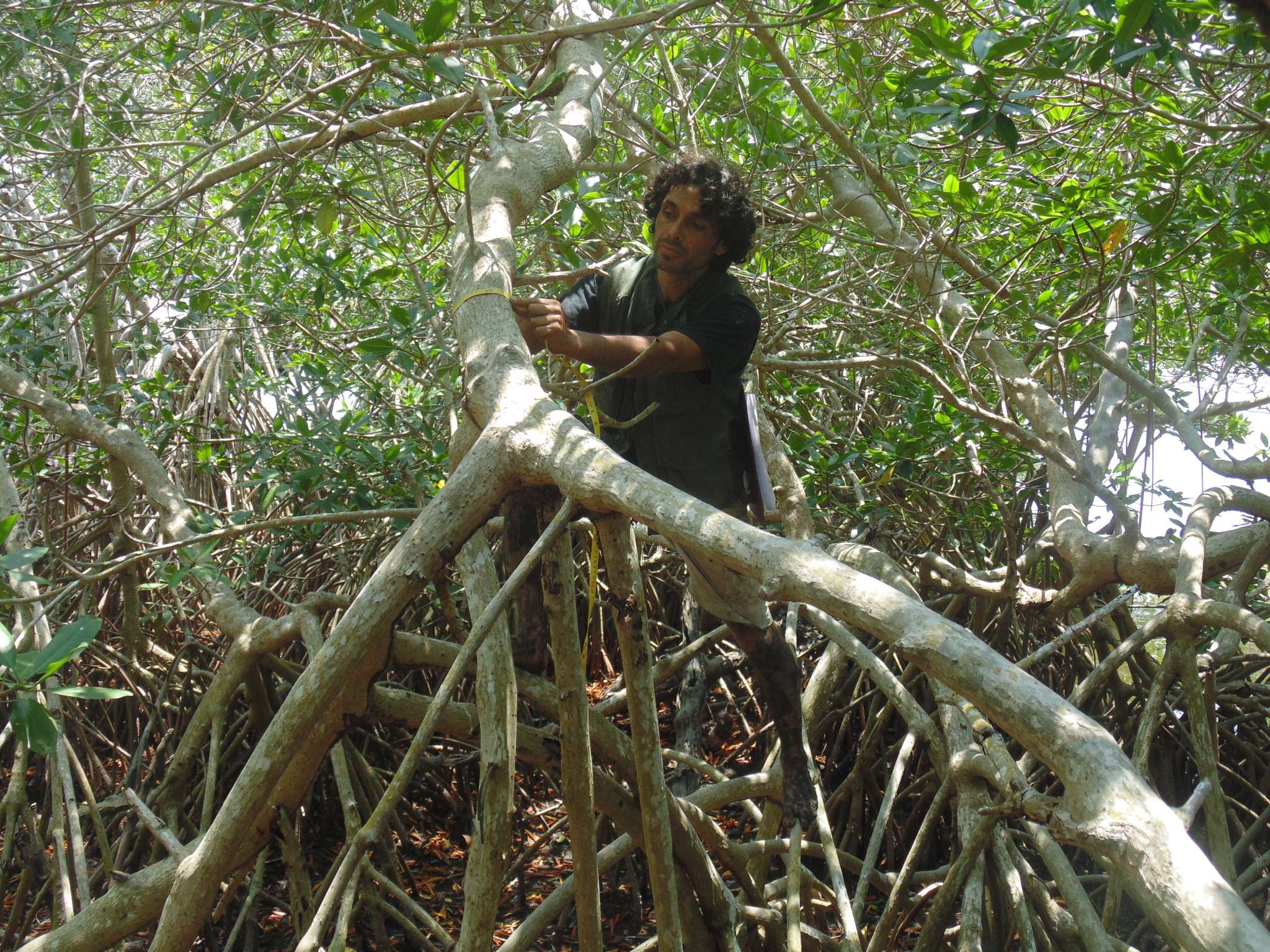
But mangroves ecosystems are at a crossroads in more way than one. The threats they face are myriad, but the chief concerns are agriculture, aquaculture, coastal urbanisation, and climate change. Warmer sea-surface temperatures are increasing the frequency of hurricanes, bringing extreme wind speeds that have devastating consequences for trees. Approximately 35% of the world’s mangrove forests were lost between 1980 and 2000, but awareness has grown and so has mangrove reforestation and restoration. Operation Wallacea’s associated charitable trust The Wallacea Trust has undertaken important work to tackle obstacles that are preventing carbon credits from funding largescale mangrove reforestation. Crucially, these high-quality projects will align human and biodiversity objectives to restore healthy ecosystems that mitigate our carbon emissions.
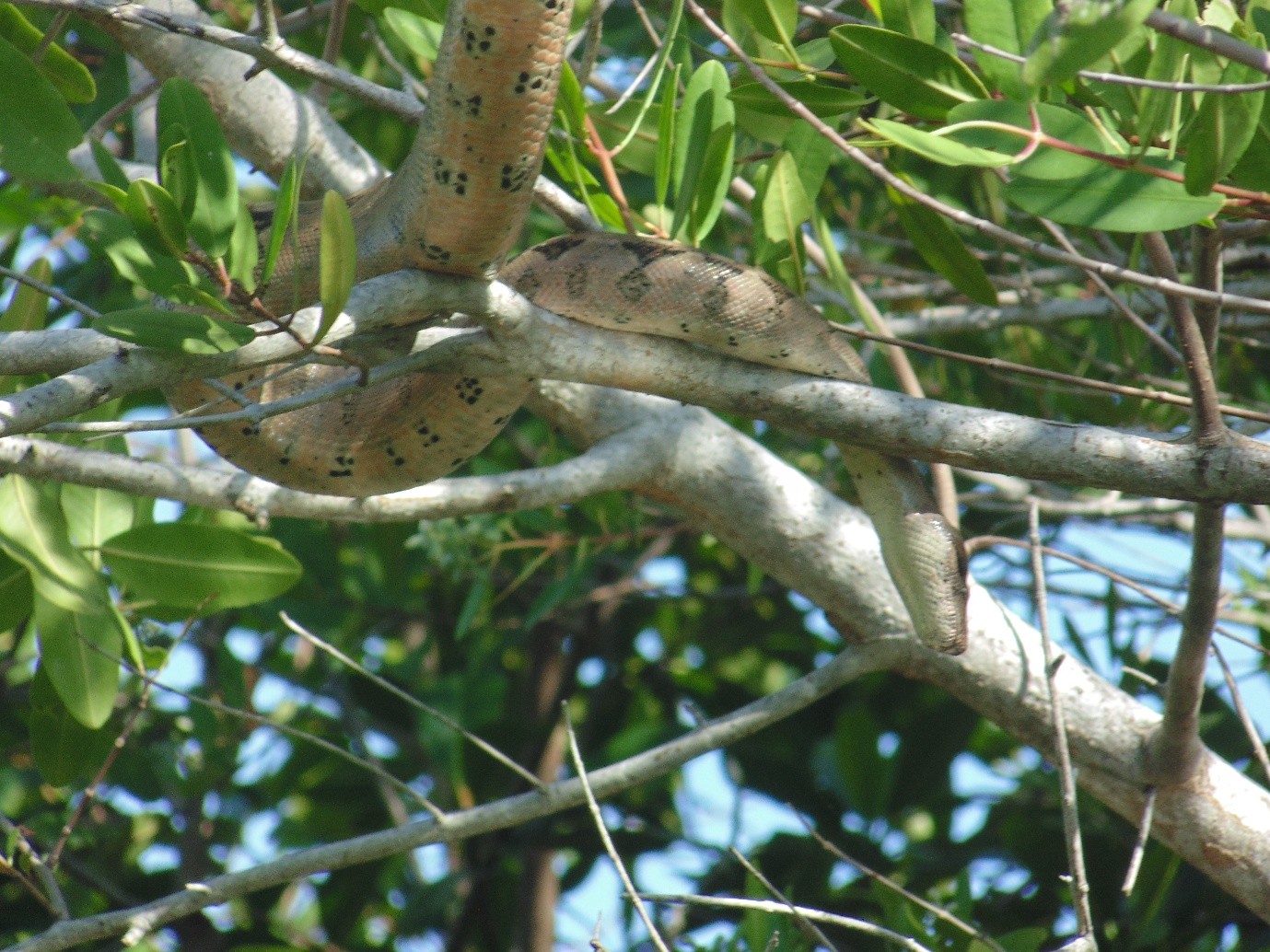
The Mexican West Coast Boa Constrictor (Boa sigma) is completely at home in the mangroves. This able swimmer and climber is seen here in the branches of a white mangrove tree (Laguncularia racemosa)
As open systems mangroves are highly important for the biodiversity and functioning of many connected marine and terrestrial ecosystems. Well-designed restoration projects can allow biodiversity to recover and nurture forests that are resilient to increased storminess. In La Ventanilla the health of the mangrove is inextricably tied to the cooperative’s success, and the experience of gliding silently though the water is one that thousands of visitors will never forget. In the words of the Global Mangrove Alliance, it’s time to “halt loss, restore half, and double protection”!
Photos by Mateo Ruiz Bruce Taylor


© 2026 Operation Wallacea Ltd. Website by Yello Media.
Social Media Links