
Ever encountered a snake and weren’t sure what you were looking at? Well, no longer! Here’s a quick guide to the native snakes you might find in the UK (there’s only 3 so shouldn’t take too long to learn!).
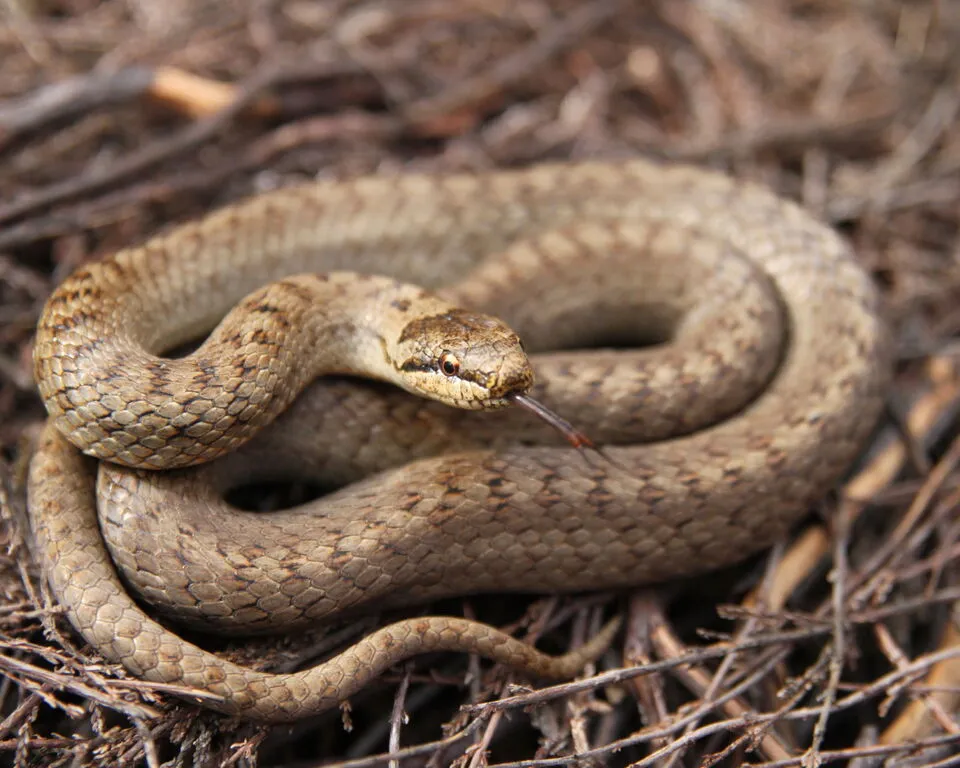
Smooth snake photo by Steve Davis (Wildlife Trusts)
First up, the smooth snake (Coronella austriaca). This is the rarest species in the UK, restricted to only a few areas on southern lowland heathland. This is a protected species which you will only see between April and October as they hibernate over winter. They incubate eggs internally and give birth to live young around September.
They can be up to around 70cm long and is usually a more uniform colour than the other species, which have distinctive patterns. Generally grey or brown with a lighter coloured belly and a darker stripe on the side of the head.
It is a constrictor and generally preys on lizards, insects and small mammals, and is predated upon by foxes, badgers, birds of prey and weasels. Its bite is not venomous, and it is a very shy and secretive species. The main threat is habitat loss, as lowland heath is a very fragmented and degraded habitat.
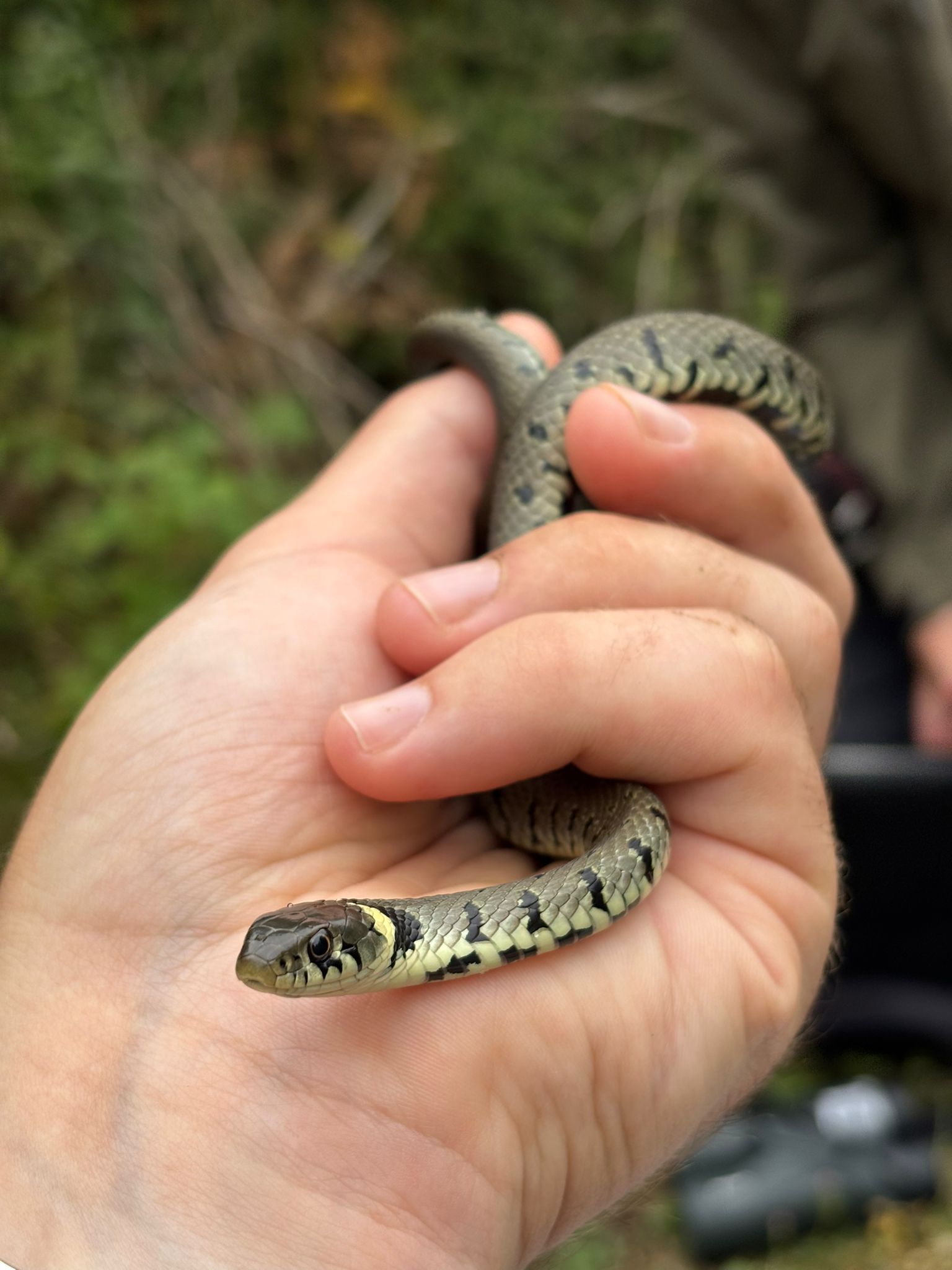
Grass snake photo by Sacheus Holloway-Jones
Next up, the grass snake (Natrix helvetica). Fun fact – the British population is actually a different species to the grass snakes found across Europe, which are Natrix natrix. This species is also protected by law.
This snake is relatively widespread across England and Wales and is the UK’s longest snake, growing up to 150cm long! This species can be found in a wide range of habitats but generally are close to water, and you may even spot them swimming! They lay eggs in rotting vegetation such as compost heaps, which incubates them until they hatch in Autumn (the only British snake to lay eggs). This is another species that hibernates over winter.
This species is much more distinctive to identify due to the yellow and black collar on the back of its neck. They are mostly a dark greenish brown with dark markings on the sides. Females are larger than males.
Grass snakes predate frogs, toads, fish, birds and small mammals, and swallow their prey whole. They have no venom and don’t bite, but its defences from predators (such as badgers, foxes, cats and birds of prey) include “playing dead”, and releasing a disgusting smelling secretion from their anal gland.
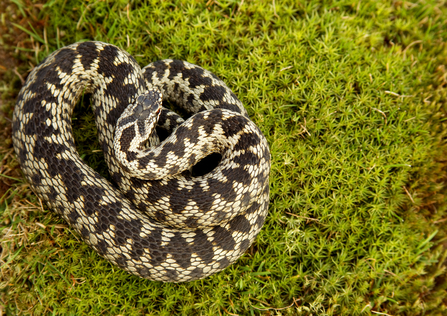
Adder photo by Danny Green (Derbyshire Wildlife Trust)
Finally have the adder (Vipera berus), which is the only venomous species in the UK. This is a smaller species, growing up to 80cm long, and these are also a protected species.
This snake is distinctive, with obvious dark zigzag markings along their backs. They are venomous however will retreat and hide in favour of biting, and will only attack if stepped on or handled. Their bites are painful but rarely fatal.
Generally this species is found in heathland, moorland and woodland edge habitats, and hunts lizards, small mammals and ground-nesting birds. Their main predators include birds of prey and large carnivorous mammals.
In spring the males perform “dances” in a fight to mate. Eggs are internally incubated, and they give birth in late summer. They are known to hibernate over winter, however in recent years there have been records of adders remaining active all year round due to a warming climate. Fun fact – adders are the most northerly-occurring snake in the world, having been found within the Arctic Circle!
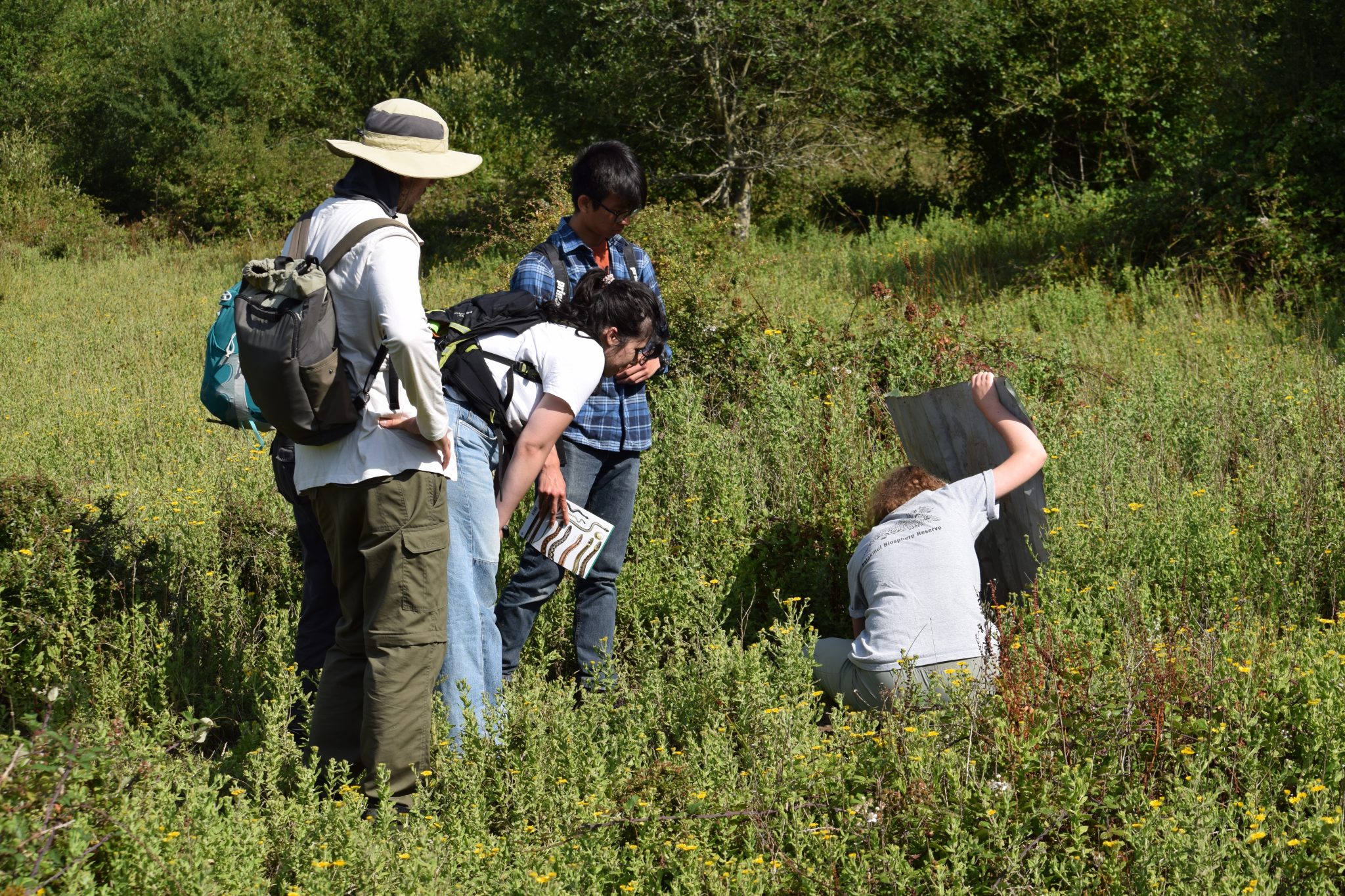
Photo by Jake Turton
What if you find a snake that doesn’t match any of these descriptions?
Well, there is a chance you could’ve seen the Aesculapian snake (Zamenis longissimus), which is a non-native species introduced to Colwyn Bay in North Wales, and Regents Park in London. They are great climbers and can be up to 2m long, and are usually a uniform grey or olive colour.
What if you see something like the picture below? What snake species is this?
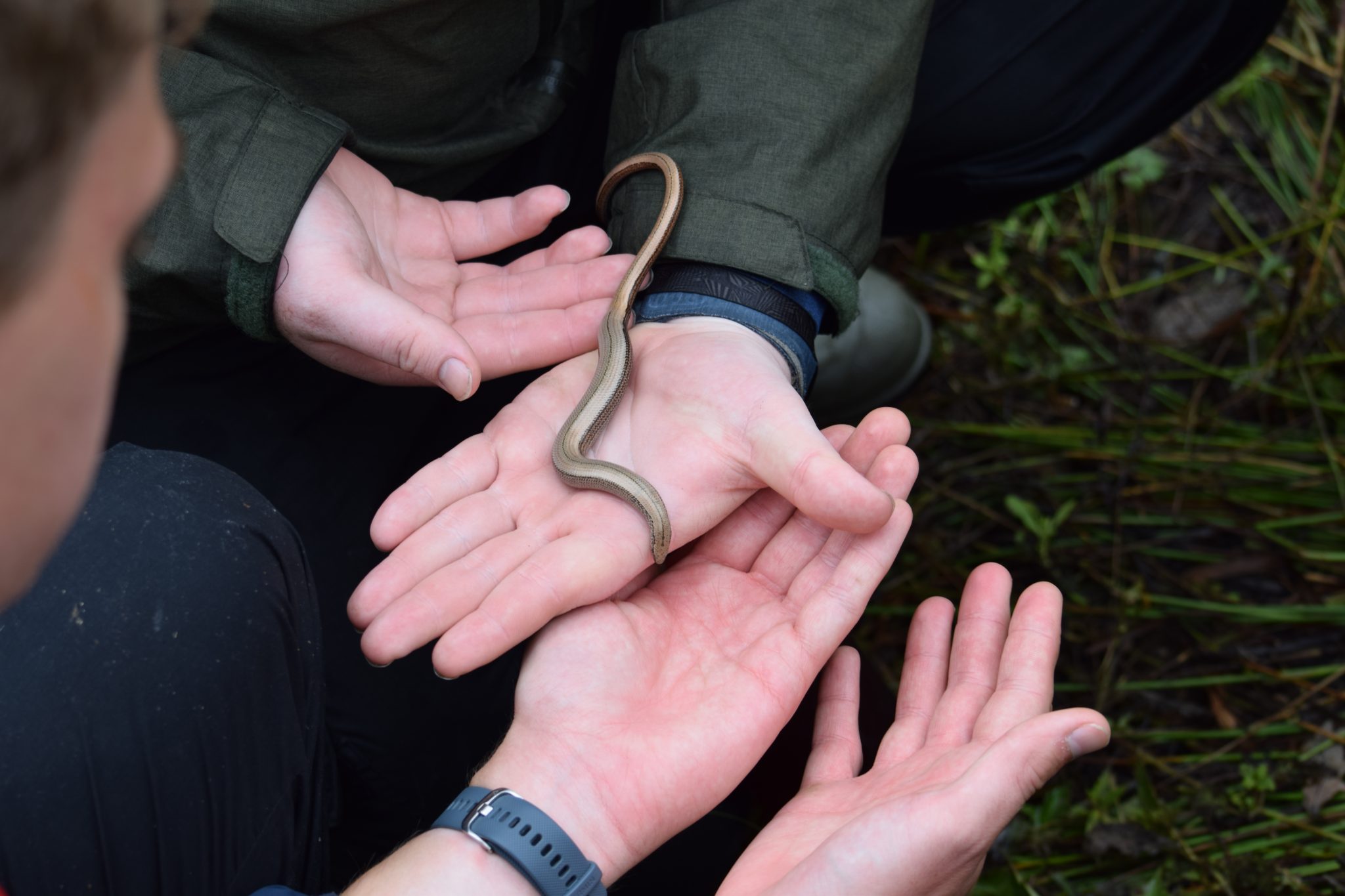
Photo by Jake Turton
STOP! This isn’t a snake, it’s a lizard in disguise!
This is the slow worm (Anguis fragilis), a legless lizard. They are much smaller, growing up to 50cm long, with grey-gold colouring. Females usually have dark sides and a dark line down their backs, which the males lack. Unlike snakes, slow worms can blink with eyelids, and also have the ability to shed their tails when threatened. This can help them to evade predation, but is also worth noting if you handle one. You need to be gentle and never hold them by their tail.
So that’s a summary of all the snakes (and snake look-alikes) you might encounter!
If you want to see a snake here are some top tips:
Title photo by Johana Simonova


© 2026 Operation Wallacea Ltd. Website by Yello Media.
Social Media Links