
What is Entomology?
In short, entomology is the study of insects. Insects are part of phylum arthropoda, which translates to “joined legs”, and they have been pretty great at colonising the earth and evolving to fill just about every ecological niche you can think of. There are over 1 million species of insect that have been described, and many more to be found although the estimates vary somewhat in their scope.
Insects first started to evolve 480 million years ago, alongside plants, and then around 400 million years ago they started to gain the ability to fly and they have been thriving ever since. Some of the very early orders did die out in the early mass extinction events but there were some that held on, and many of the orders we are familiar with today evolved alongside flowering plants.
As you can imagine, which such a long history and incredible diversity there is a lot to look at and study. But what exactly is involved?
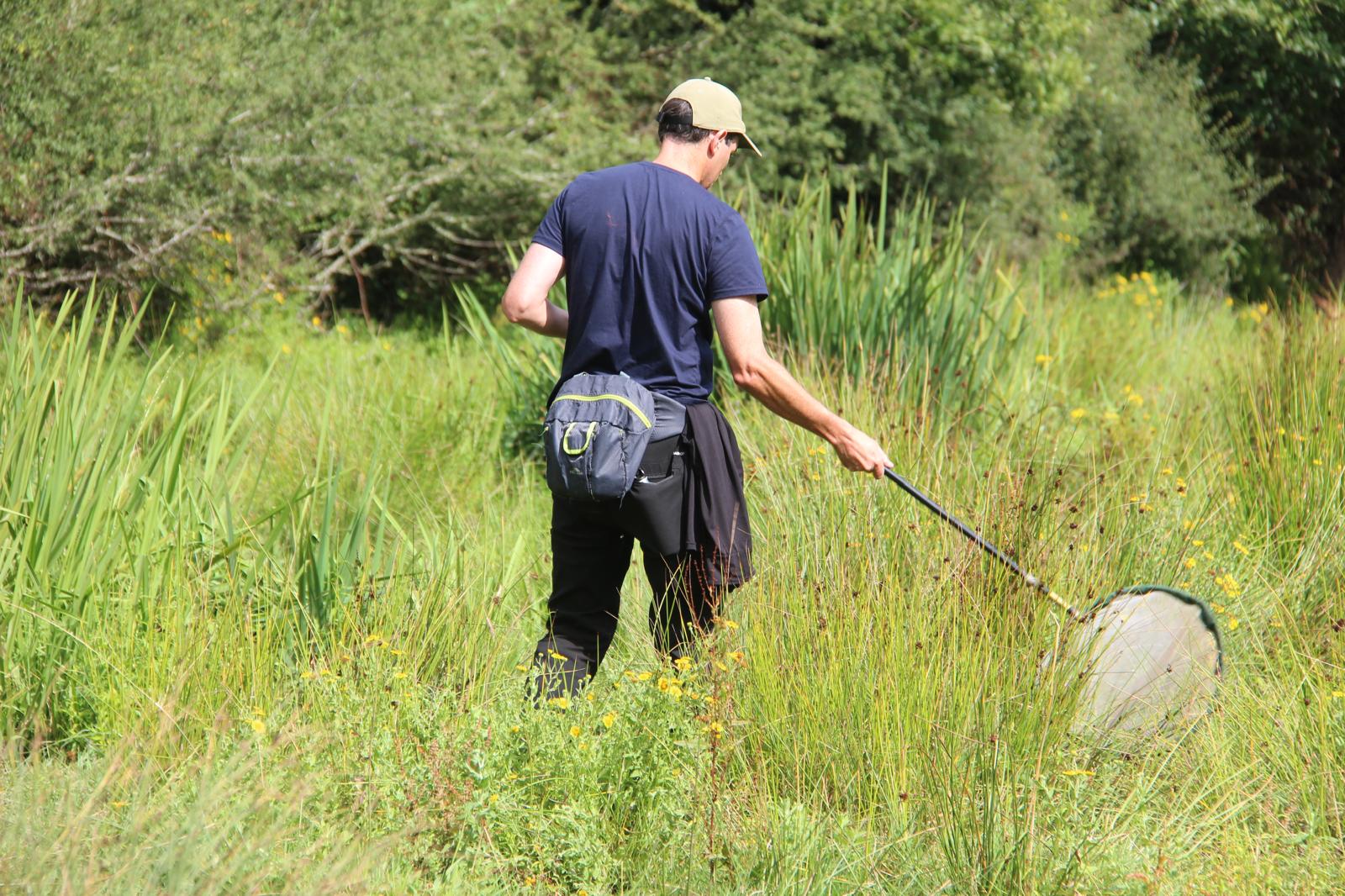
Photo by Elen Griffith
How do you study insects?
Entomology is multidisciplinary and there are many ways you can take a career. But first things first – you have to learn about what it is you are looking at, and how you can go about doing that.
Field work is a very important part of entomology, and a lot of students are surprised at how much effort is involved. Our insect friends are very important in the ecosystem, but they are also quite difficult to get a look at. To do so, a range of trapping and capture methods needs to be used – far more varied than say a point count or transect sampling. Some methods will involve capture and release if the insects are very distinct and easy to identify (like some species of Lepidoptera), while other methods involve euthanasia of samples to put them under a microscope and look at much finer details.
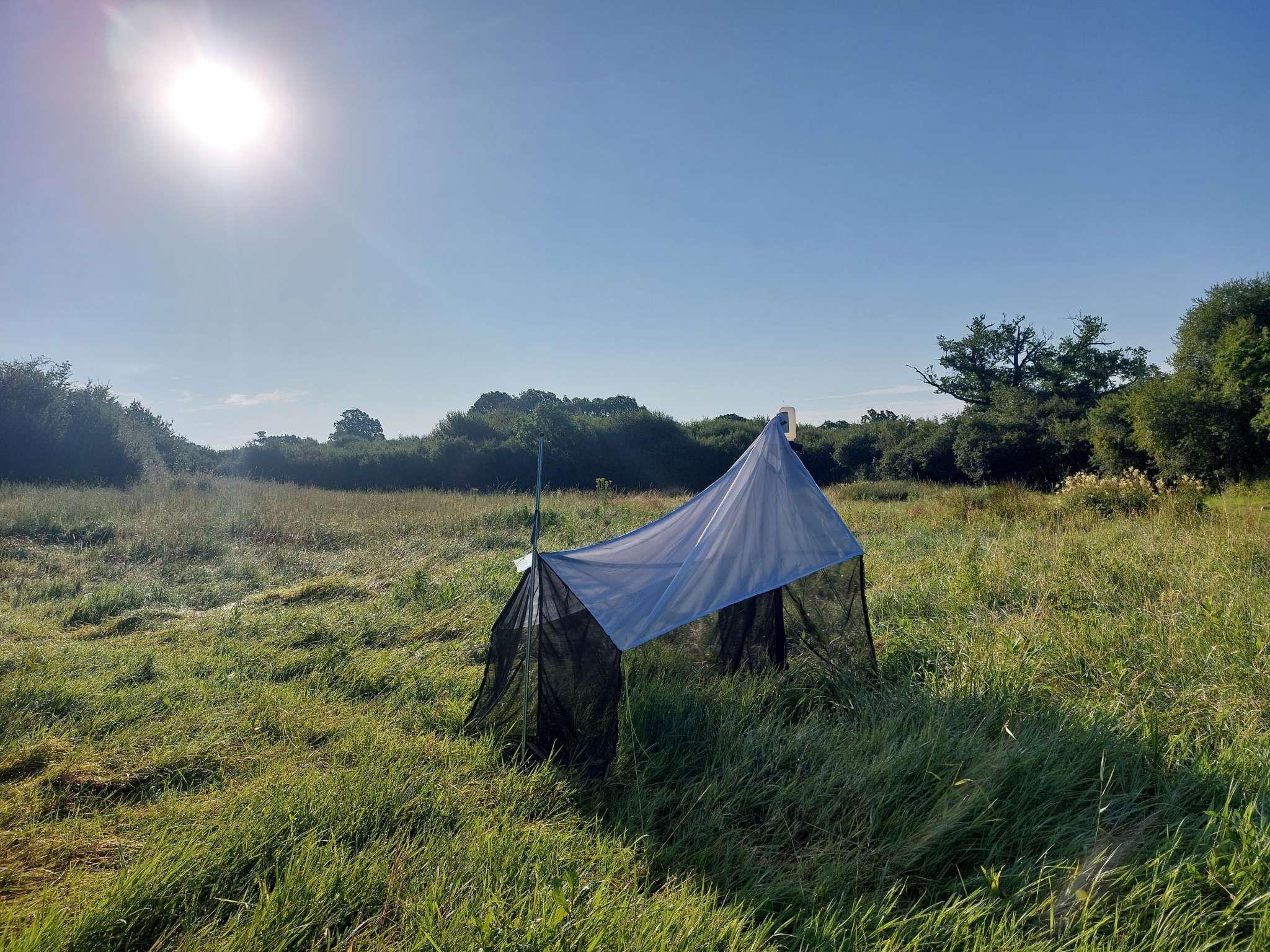
Photo by Fran Anderson
The euthanasia of some specimens is something that many students (and even those in academia) can struggle with. After all, if you are wanting to preserve an ecosystem or understand something, it can be an obtuse thought that you have to kill something to do so. But the elephant in the room is that many insects are very difficult to identify on wing. Many of them are tiny. Many of them move very quickly, and many of them are differentiated by features on their body and wings that you can only see by pinning out certain appendages and looking at under a microscope. Indeed, we wouldn’t know anything about many of the smaller insects if they hadn’t been trapped – and often it is smallest that can be some of the most diverse and key drivers.
After the fieldwork we then have analysis – and this can involve digital imaging, genetics and microscopy. All extremely fascinating, but you will spend an awful lot of time looking at dichotomous keys!
So, what is the best bit of entomology?
For me, it is being able to go and visit some truly wonderful field sites. There is nothing quite like the hearing the hum of a marmalade hoverfly in the woods at the Knepp estate, or seeing a cloud of butterflies in Romania or Madagascar.
As a small confession – when I was growing up I was never a huge fan of moths but now I love opening the trap to see what we find inside (shout out to the Hawk Moths!)
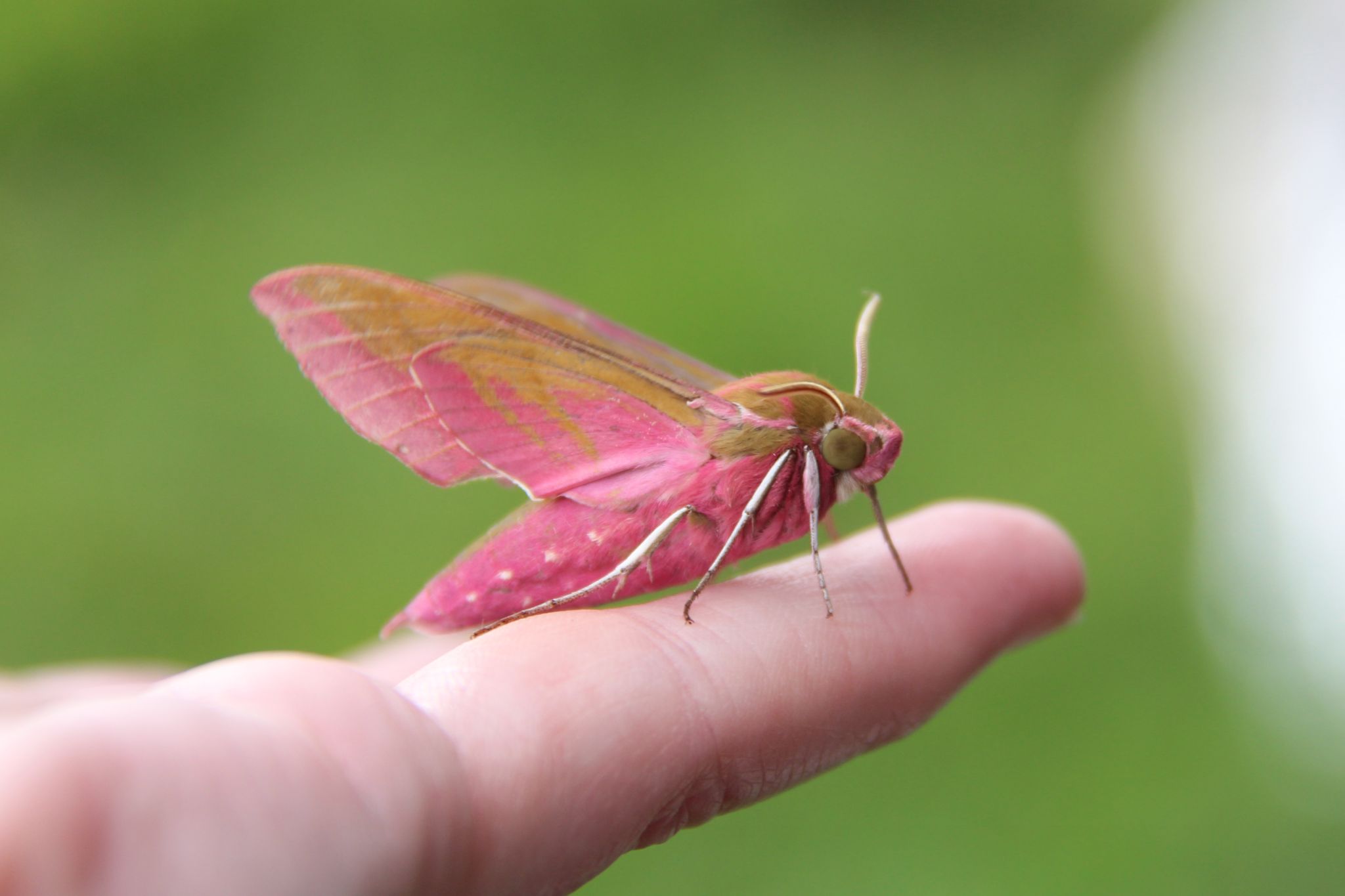
Photo of an Elephant Hawk Moth by Elen Griffith
Studying insects is also treasure trove of undocumented knowledge – you might have guessed already that there is still so much out there to discover in the field entomology. It is very much like going into the unknown and you never know what you’re going to find. Even in the UK, which is one of the most ecologically described places on the planet, we are still finding things we didn’t know were here (see Megacelia limpachensis for a species never before recorded in the UK!).
Getting to look at things under a microscope is also a revelation, and for me as a survey leader on Opwall field sites it is always wonderful to see how my students’ faces light up when they first get to see insects at magnification and understand how incredibly complex they really are.
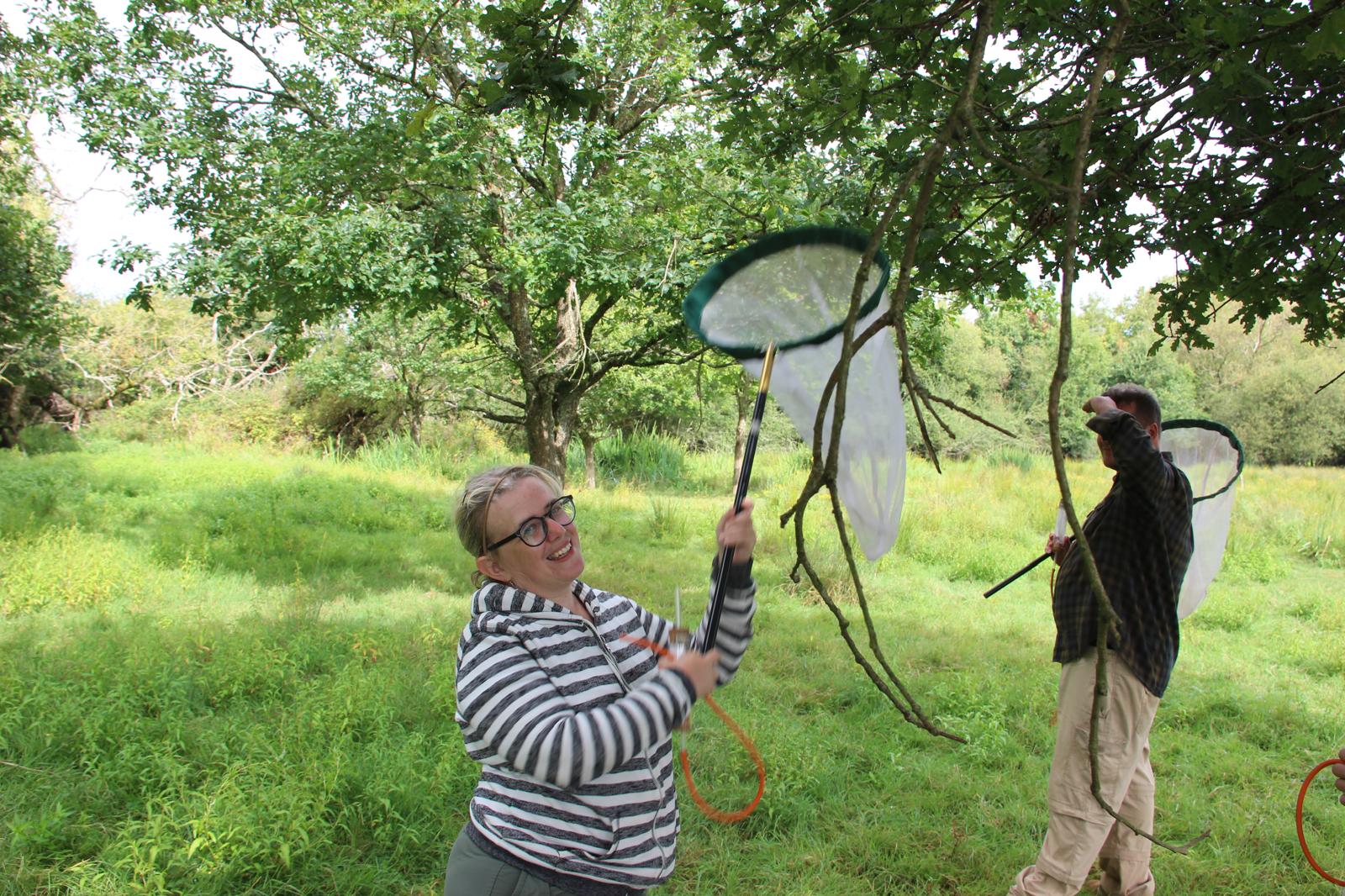
Photo by Elen Griffith
Are there any negatives to being an entomologist?
Of course, sometimes I get asked what is the worst part – and of course my first answer is always ‘what worst part????’. But I should let you know that you will have the fullest equipment shelf of anyone on the science team, and at times it does feel like you need a small army to help you move things, put traps up and then move them around (and we won’t talk about the risk of certain, curious large mammal friends trampling your carefully placed traps…)
The days can be full on too – if you imagine having to set a moth trap at sunset and then wake up at the break of dawn to empty it, and then go out for a full day of collecting and processing – sleep can sometimes feel like a unknown concept. And of course, you can find yourself in some very strange places looking for an insect!
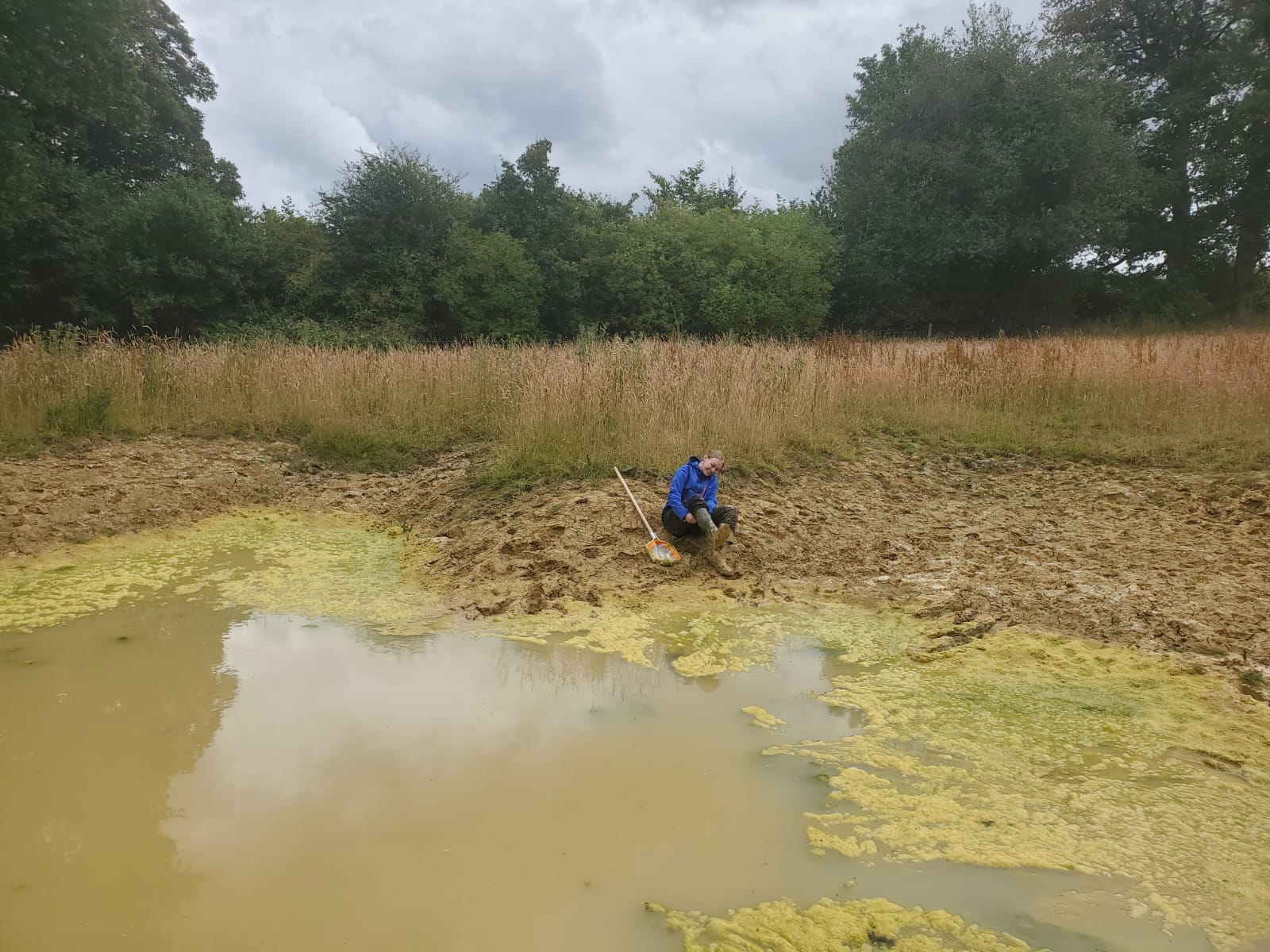
Photo by Ian Thornhill
What is the long-term impact of my work?
Finally, I want to end on what we do with all of the samples that we collect. At the Knepp Estate Opwall project we are extremely privileged to be able to send our samples to the Natural History Museum in London, to add to the permanent UK biodiversity record and aid our understanding of UK wildlife and the impact of rewilding projects. Getting the opportunity to be able to learn how to pin and mount the the specimens is something so many students love being able to do but… on more than one occasion, a student has definitely cursed the existence of micro pins.
Studying entomology is a privilege, and I am proud of the contributions I have made personally towards our understanding of invertebrates. I am also thrilled that part of my job is teaching students to appreciate our insect friends, and knowing that every year I have increased the number of people who will consider entomology as a career path.
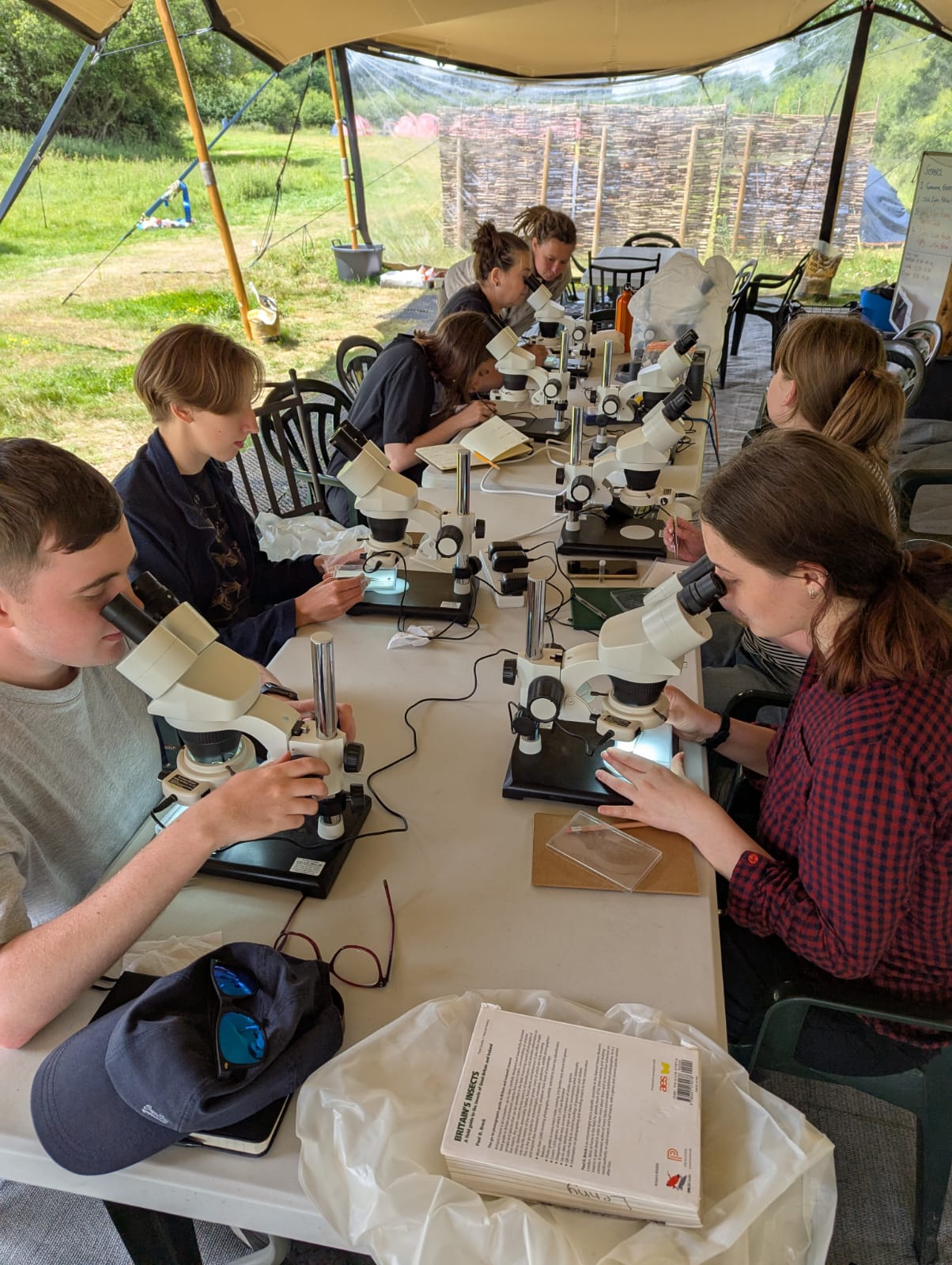
Photo by Shalaila Soni
I hope this blog has clarified the field of entomology for you. I discovered my path as an entomologist very late, but it is such a fascinating field! I hope you will give it a chance, and fall in love with it too.
Title photo by Johana Simonova


© 2026 Operation Wallacea Ltd. Website by Yello Media.
Social Media Links