
My journey to Silba was something of a whirlwind. I’d seen the expedition advertised by Blue Tits, the wild swimming society at my university, and had heard plenty about Opwall from a friend. It looked incredible, but I’d never seriously considered going myself.
I love the sea, sure, but I’m a biochemist. My world revolves around proteins, the immune system and molecular pathways, not ecosystems. I live in Scotland, don’t particularly enjoy hot weather, have underlying health conditions and, in all honesty, hated the few ecology lectures I’d ever attended. The list of excuses went on.
Yet somewhere between exams, presentations and desperately trying to finish my dissertation, my curiosity started winning out. So, at 3am, buried under university work and making what felt like a spectacularly questionable life decision, I signed myself up for two weeks on Silba – little did I know it would turn out to be one of the best decisions I’ve ever made.
Five days after graduating, I found myself boarding a ferry bound for a tiny Croatian island with a group of complete strangers. That didn’t last long though, as it turns out four hours of sailing, with the sound of the sea drowned out by our rumbling stomachs, is all it takes for strangers to become good friends. (For any future Silba participants reading this: pack snacks. Lots of them. Trust me.)
Waiting on the harbour were members of staff ready to welcome us with a smile, and stepping onto the island, I immediately felt at home. From here, life on Silba quickly settled into a rhythm.
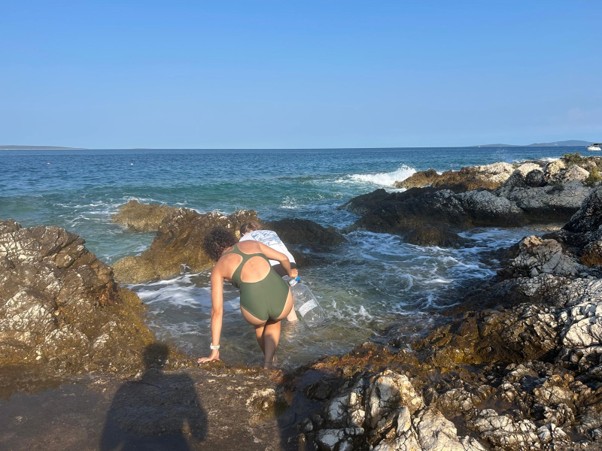
Each morning began with breakfast followed by Fanny’s cheerful cry of “Water run time!”. When, armed with bottles, we’d head down to the shoreline to collect seawater for flushing the toilets. It sounded bizarre at first, but after a couple of days it became completely normal. Besides, there really is nothing quite like helping someone flush a toilet to accelerate the bonding process.
Credit: Annie Weston
With storms keeping us on our toes, there was often one more task before the day truly began. As dark clouds rolled in we’d all rush to dismantle the dive tent before the wind reached it – only to put it all back together again once the weather had passed. It should have been a chore but, somehow, it just became another excuse for a laugh.
Then it was time to dive.
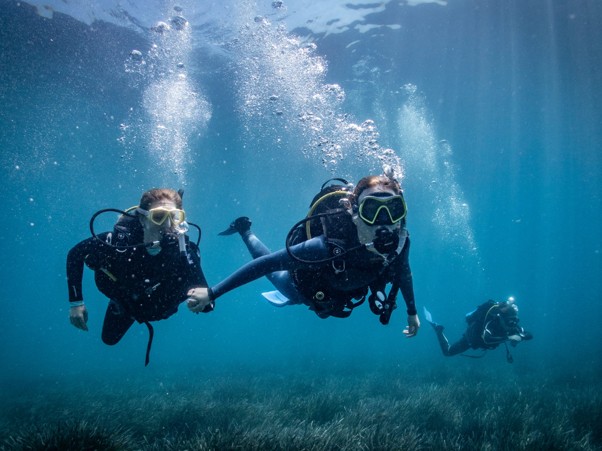
Under the patient guidance of our scuba Sensei Adrian, those of us working towards our Open Water qualification gradually transformed from clueless beginners into actual divers. Well… mostly.
There was buoyancy to wrestle with, masks to flood, and hand signals to remember, but before long we were floating through the Adriatic as though we’d been doing it for years.
Credit: Annie Weston
I’d expected scuba diving to be exciting. I hadn’t expected it to be so peaceful – or so funny. Whether it was wildly enthusiastic hand waving or watching someone trying to communicate “LOOK! OCTOPUS!” using only their eyebrows, I don’t think I surfaced from a single dive without laughing.
As someone who’s spent years studying life through lecture slides, models and diagrams, there was something deeply humbling about finally seeing it in its natural habitat. Every dive left me wanting more.
Away from diving, life (for me, at least) revolved around food.
Monika kept us fed with delicious homemade lunches, while dinner arrived every evening by tractor from one of the local restaurants. On an island with almost no motor vehicles, that little engine soon became the soundtrack of our evenings. Often, someone would pause mid-conversation and ask, “Can anyone hear it yet?” before we’d all cheer as dinner rolled into camp. We must have made the driver feel like such a hero.
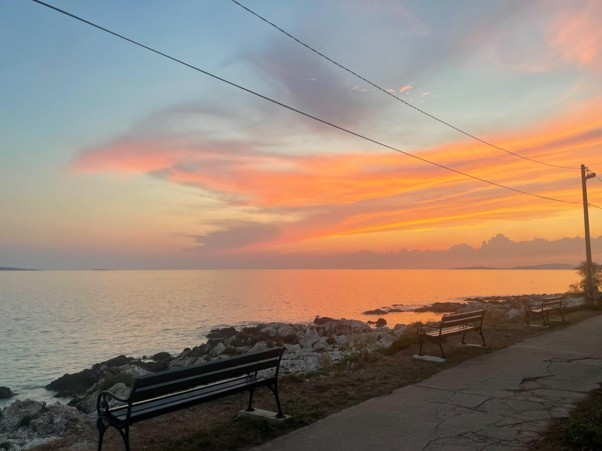
Some evenings we’d stay chatting around the dinner table. Others we’d watch a film or wander down to the pier with supermarket tapas to watch the sunset before someone (usually me) inevitably decided to jump in for a swim. Somewhere along the way we also developed a tradition of rewriting songs into scuba diving parodies and I’ll never hear Eleanor Rigby the same again.
Credit: Annie Weston
Of course, though, that wasn’t all we did.
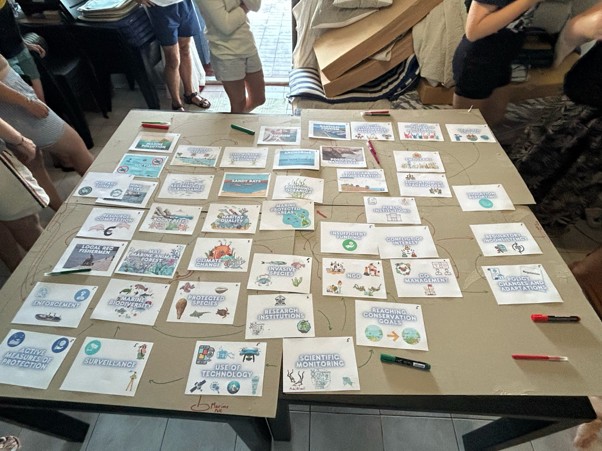
The work was fascinating, not just because of what we were surveying, but because it revealed how much work conservation actually involves. It’s easy to imagine it as simply counting species or protecting a beautiful place; the reality is much messier. Ecosystems are complicated. Human impacts are extensive. Collecting good data is painstaking, and answering even seemingly simple questions often takes years of careful monitoring.
Credit: Annie Weston
Coming from a laboratory background, I found myself appreciating just how much good field science depends on patience. You can’t rush an ecosystem; nature doesn’t care about your deadlines.
What struck me most, though, was the people. I’ve never seen enthusiasm quite like theirs before.
Whether it was Adrian explaining diving theory, Sara getting excited about fish identification, Maisie pointing out nudibranchs, Tom lecturing on extinction, or everyone becoming disproportionately excited over a tiny snake on an evening reptile walk, every single person had something they absolutely loved. It was infectious.
There’s a particular joy in listening to someone talk about the thing they’re passionate about. You don’t have to share their expertise to be swept along by their excitement. At some point over those two weeks I realised that enthusiasm is one of the best things a person can share.
So, two weeks in Silba. What did I learn?
Well, yes – I learnt to scuba dive.
I learnt how conservation science works, why long-term monitoring matters and just how much effort goes into collecting the data that underpins environmental protection.
But I also learnt something much more valuable.
I’d spent months assuming an expedition simply wasn’t something I’d ever do. I was “just” a biochemist. I didn’t know my wrasse from my gobies, and I’d long since decided ecology wasn’t really for me.
I couldn’t have been more wrong.
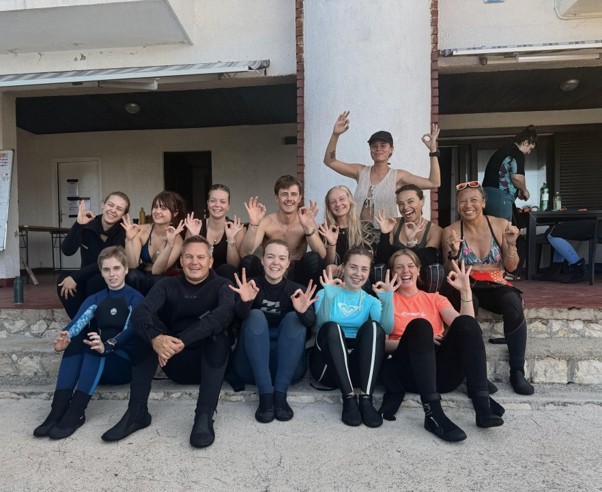
Some people on Silba were biologists. Some weren’t scientists at all. Some were dive masters, while others had never put a BCD on before. It didn’t matter. We all ended up cheering when someone spotted an octopus, laughing until our stomachs hurt at increasingly questionable scuba parodies, and listening, completely captivated, as someone shared the thing they loved most.
And that’s what I’ll remember: the morning water runs, the dive tent surviving another storm, the sound of the dinner tractor, sunsets from the pier, underwater laughter, and most importantly, the people.
Credit: Annie Weston
I came to Silba expecting to learn about marine ecology. Instead, I left reminded why I fell in love with science in the first place. Not because science is about having all the answers, but because it’s driven by curiosity.
Curiosity that leads someone to spend years studying proteins. Curiosity that leads someone else to dedicate their life to fish, seagrass or conservation. Curiosity that makes you stop to look a little closer at the world around you.
And curiosity that, at three o’clock one morning, persuaded a slightly sleep-deprived biochemist to sign up for an expedition she’d convinced herself wasn’t right for her.
It turns out curiosity doesn’t care what degree you studied. Sometimes the best thing you can do is say yes to it.
Written and title photo by Annie Weston


© 2026 Operation Wallacea Ltd. Website by Yello Media.
Social Media Links