
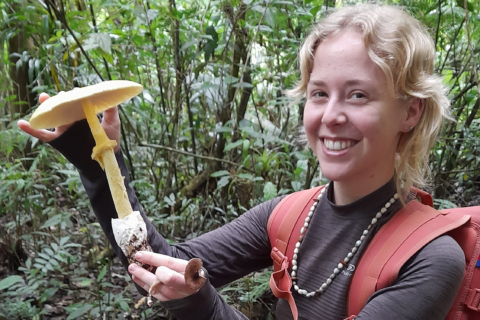
My PhD research explores the remarkable diversity of tropical fungi and their relationships with the environment. As part of the first long-term monitoring project in Honduras, we are documenting fungal diversity across three camps in Cusuco National Park using three different collection methods: sporocarp collections, soil samples, and moss swabs. This dataset will allow us to describe new species across a variety of genera, including Simocybe, Mycena, Entoloma, Lactifluus, Calostoma, and Chlorociboria. Furthermore, we will be able to investigate the effects of different environmental parameters, such as soil pH, soil depth, leaf-litter depth, and disturbance, on fungal community composition and diversity.
Fungi are indispensable elements in the composition and functioning of ecosystems, as nutrient recyclers, dominant decomposers, parasites, and mutualists. Yet only approximately 6% of the world’s fungal diversity has been described to date. This research will contribute to a better understanding of fungal ecology and diversity and can ultimately help incorporate fungi into conservation and protection strategies in Honduras. This is particularly important, as decades of research have shown that fungi are negatively affected by anthropogenic activities, with the underlying threats being essentially the same as those affecting animals and plants.


Social Media Links